
If you’re here because you’re exploring an adult ADHD diagnosis and trying to understand inattentive ADHD vs hyperactive traits, you’re in the right place. If you’ve spent any time on the internet lately, you’ve probably seen the memes. One minute you’re looking up how to boil an egg, and forty-five minutes later, you’re reading the Wikipedia entry for the history of the Ottoman Empire while your kitchen slowly fills with steam.
For a lot of us, that’s just a Tuesday. But when we talk about an adult ADHD diagnosis, the conversation usually gets stuck in two very specific camps: the "bounce" and the "blur."
At Byrnes Counseling Group, we see neurodivergence not as a broken set of gears, but as a different kind of engine. As a trans-led practice, we know a thing or two about navigating a world that wasn't built for us. Whether you’re vibrating out of your chair or drifting off into the stratosphere, you aren't "failing" at being an adult. You’re just operating with a different set of physics.
Let’s break down the two main ways this shows up: the focus problem and the fuel problem.
The "Fuel" Problem: Hyperactive-Impulsive ADHD
When people think of ADHD, they usually think of a seven-year-old boy doing parkour off the living room sofa. That’s the "bounce." But in neurodivergent adults, hyperactivity rarely looks like literal bouncing. Instead, it feels like having a Ferrari engine but bicycle brakes.
This is the fuel control issue. It’s an internal restlessness that feels like a hum in your bones. You might not be running laps around the office, but you are:
- Fidgeting with your rings, pens, or cuticles until they’re sore.
- Talking at 1.5x speed because your brain is already three sentences ahead.
- Interrupting people: not because you’re rude, but because the thought is a "now or never" situation.
- Feeling a physical sense of "doom" or intense boredom if you have to sit still in a long meeting.
In our welcoming therapy office, we have plenty of fidget toys on the tables for a reason. That "fuel" needs an outlet. If you don’t give it one, it turns inward and becomes anxiety. You’re "driven by a motor," and while that motor can be great for getting things done in a crisis, it’s exhausting when you just want to watch a movie.

The "Focus" Problem: Inattentive ADHD
Then there’s the other side of the coin: the "blur." This is Inattentive ADHD, and it’s often the one that gets missed for decades. If the hyperactive type is a fuel problem, the inattentive type is a focus problem.
It’s not that you can’t focus: it’s that you can’t choose what to focus on. Your brain is a spotlight being operated by a toddler. Sometimes it’s stuck on a random hobby for ten hours (hyperfocus), and sometimes it’s pointing at a fly on the wall while your boss is giving you instructions.
Common "blur" traits include:
- The "Space Cadet" feeling: You’re physically present, but your brain is on a different planet.
- The "What did I come in here for?" walk: Entering a room and immediately losing the objective.
- Object Permanence issues: If you can’t see your keys, they don’t exist. They have vanished into the ether.
- Slower processing: You’re smart, but it takes a second for the information to "land" and make sense.
For many neurodivergent adults, this presentation leads to a lot of shame. You might have been told you’re "lazy" or "not living up to your potential." We’ve talked about this before in our post about dropping the mask of perfection: the effort it takes to look "normal" when your brain is naturally drifting is immense.
The Internal Vibrations: Why It Feels Different as an Adult
As we get older, the "bounce" often migrates inside. This is why many people who were hyperactive kids grow up to be adults who feel constantly anxious. That physical energy has nowhere to go, so it becomes a mental vibration.
You might feel like you’re constantly "on call" for a disaster that hasn’t happened yet. This is something we see a lot in our EMDR therapy sessions, where we help untangle that physical feeling of being "on" from the traumas that might have put it there in the first place.

Whether it’s focus or fuel, the common denominator is a nervous system that is seeking stimulation. Your brain is looking for a hit of dopamine, and it will find it through movement, distraction, or: unfortunately: stress.
The Intersection of Gender and Neurodivergence
At Byrnes Counseling Group, we don’t just look at ADHD in a vacuum. We’re a trans-led practice, and we know that for the LGBTQ+ community, neurodivergence hits different.
If you spent years "masking" your gender identity, you probably also spent years masking your ADHD symptoms. You learned how to act "normal" to survive. When you finally start to embrace your true self: whether that’s through gender transition or just coming out: the "ADHD mask" often starts to slip too.
It can be overwhelming to realize you’re dealing with both a gender journey and a neurodivergent one at the same time. But here’s the secret: they often feed each other. The same creativity, resilience, and "outside the box" thinking that makes you who you are is fueled by that neurodivergent brain. You can read more about this in our thoughts on grieving the girlhood you didn't have or navigating identity.
Why an Adult ADHD Diagnosis Matters
A lot of people ask, "Why bother with a diagnosis now? I’ve made it this far."
The answer isn't about getting a label to hide behind. It’s about getting a manual for your own brain. When you understand that you have a "focus problem" or a "fuel problem," you can stop blaming your character and start adjusting your environment.
Instead of saying "I'm a failure because I forgot to pay the electric bill," you can say "My inattentive brain has a hard time with non-stimulating tasks. I need to put this on autopay and set three calendar reminders."
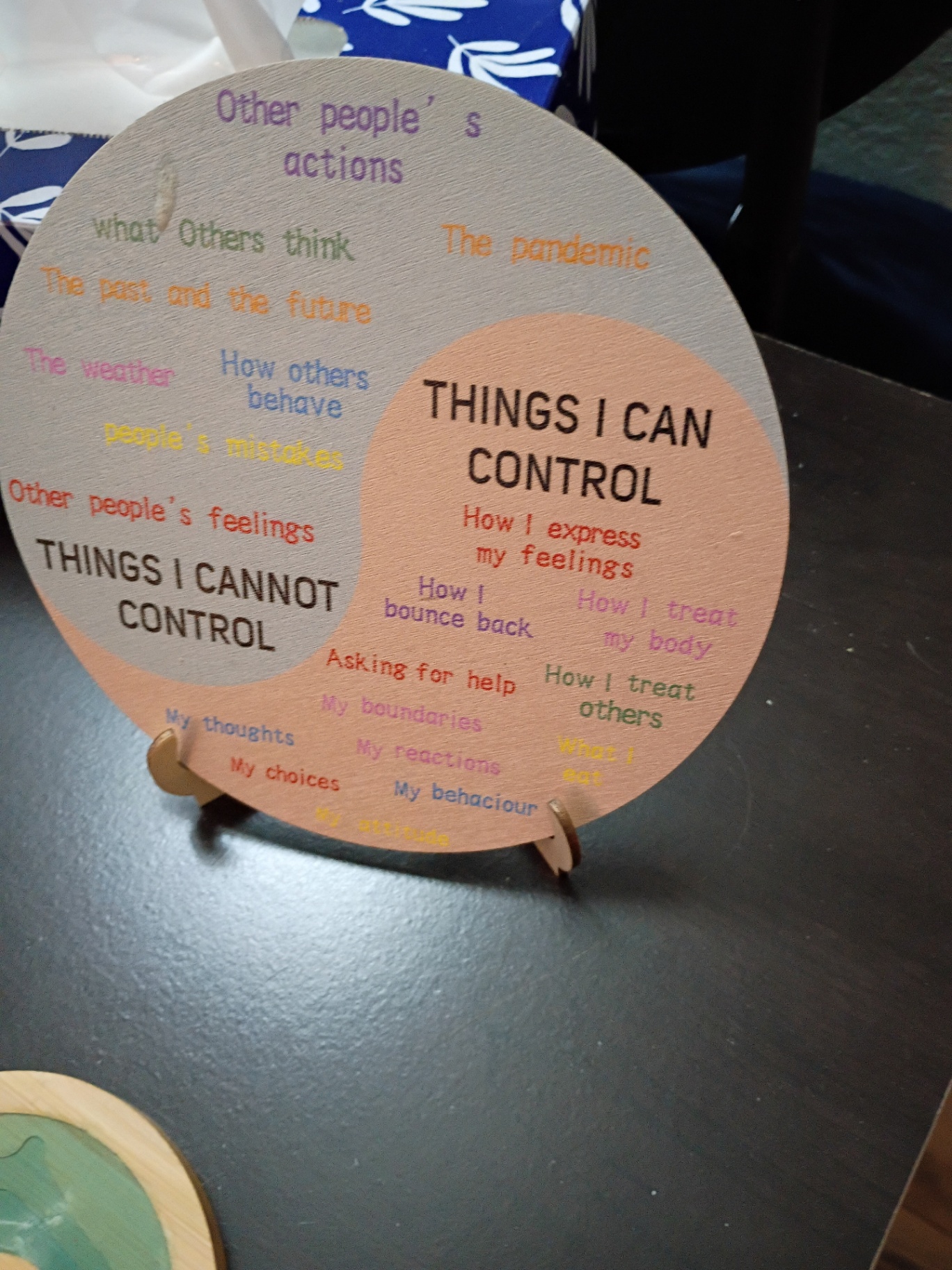
It’s about moving things from the "I suck" category into the "I can manage this" category. We love using tools like the Venn diagram of control to help clients figure out what they can actually change and what they need to accept.
Moving Forward: Managing the Engine
So, is it focus or fuel for you? Or maybe it's a bit of both (the "Combined Type" is actually the most common!).
Regardless of where you fall, here are a few affirming ways to start working with your brain instead of against it:
- Stop Fighting the Fidget: If you need to pace while on a phone call, pace. If you need a spinning ring to get through a meeting, get one. Don’t punish your body for needing to move.
- Externalize Your Memory: Your brain is for having ideas, not for storing them. Post-it notes, apps, whiteboards: use them all. If it’s not in writing, it’s not real.
- Find Your "Body Double": Sometimes just having another person in the room (even if they’re on Zoom) can help an inattentive brain stay on task.
- Practice Radical Self-Compassion: You aren't lazy, and you aren't "too much." You’re navigating a neurotypical world with a neurodivergent map. Give yourself some credit.
If you’re in Florida or Pennsylvania and looking for a place that gets it: without the clinical judgment or gatekeeping: we’re here. Whether you’re looking for specific services or just want a therapist who won't look at you funny when you bring a crochet project to your session, we’ve got you.

You don’t have to "fix" your ADHD. You just have to learn how to drive the car you were given. And hey, if that car happens to be a Ferrari with bicycle brakes? We’ll help you find some better pads and a really great GPS.
Ready to talk about it? Reach out to us. Let’s figure out if it’s focus, fuel, or just the beautiful chaos of being human.