Let’s be real for a second: the term “identity-affirming” has been getting tossed around a lot lately. You see it on clinic websites, social media bios, and even on those generic "find a therapist" directories. It’s almost become like the "organic" label at the grocery store, everyone uses it, but half the time, you aren’t quite sure what’s actually inside the package.
Welcome to the first post of our "Authenticity Toolkit" series. Over the next week, we’re going to be breaking down the essentials of living an authentic, affirmed life, covering everything from trauma and polyamory to kink and life transitions. But before we get into the weeds of how to heal, we have to talk about where you’re doing that healing.
If you’re a part of the LGBTQ+ community, you’ve likely experienced the "Nod and Smile" therapist. You know the one. They’re perfectly nice, they have a rainbow sticker on their window, but the moment you mention gender dysphoria, your polycule, or the specific exhaustion of existing as a trans person in Florida, their eyes glaze over just a tiny bit. Suddenly, you aren’t the client anymore, you’re the teacher.
At Byrnes Counseling Group, we think that’s a load of nonsense. You shouldn't have to pay someone to teach them how to treat you.
What Does "Identity-Affirming" Actually Mean?
In a clinical sense, identity-affirming therapy is an approach that recognizes and validates a person’s self-identified gender, sexual orientation, and relationship structures. But in a human sense? It’s the difference between being tolerated and being celebrated.
Traditional therapy models were often built on a "normative" framework. For decades, the goal of many psychological practices was to help people "fit in" to societal standards. If you were outside the binary or lived an alternative lifestyle, that was often viewed as a problem to be solved or a symptom of a deeper trauma.
Identity-affirming therapy flips the script. It says: You are not the problem. The systems that make it hard for you to exist are the problem.
When we talk about LGBTQ therapists and identity-affirming care, we’re talking about a space where your identity isn’t a footnote, it’s the foundation. It means your therapist understands that your anxiety might not just be "in your head," but a very real response to living in a world that isn't always kind to us. It means we don't spend three sessions debating your pronouns; we use them, and then we get to work on what’s actually bothering you.
The Practice I Needed: Why Lived Experience Matters
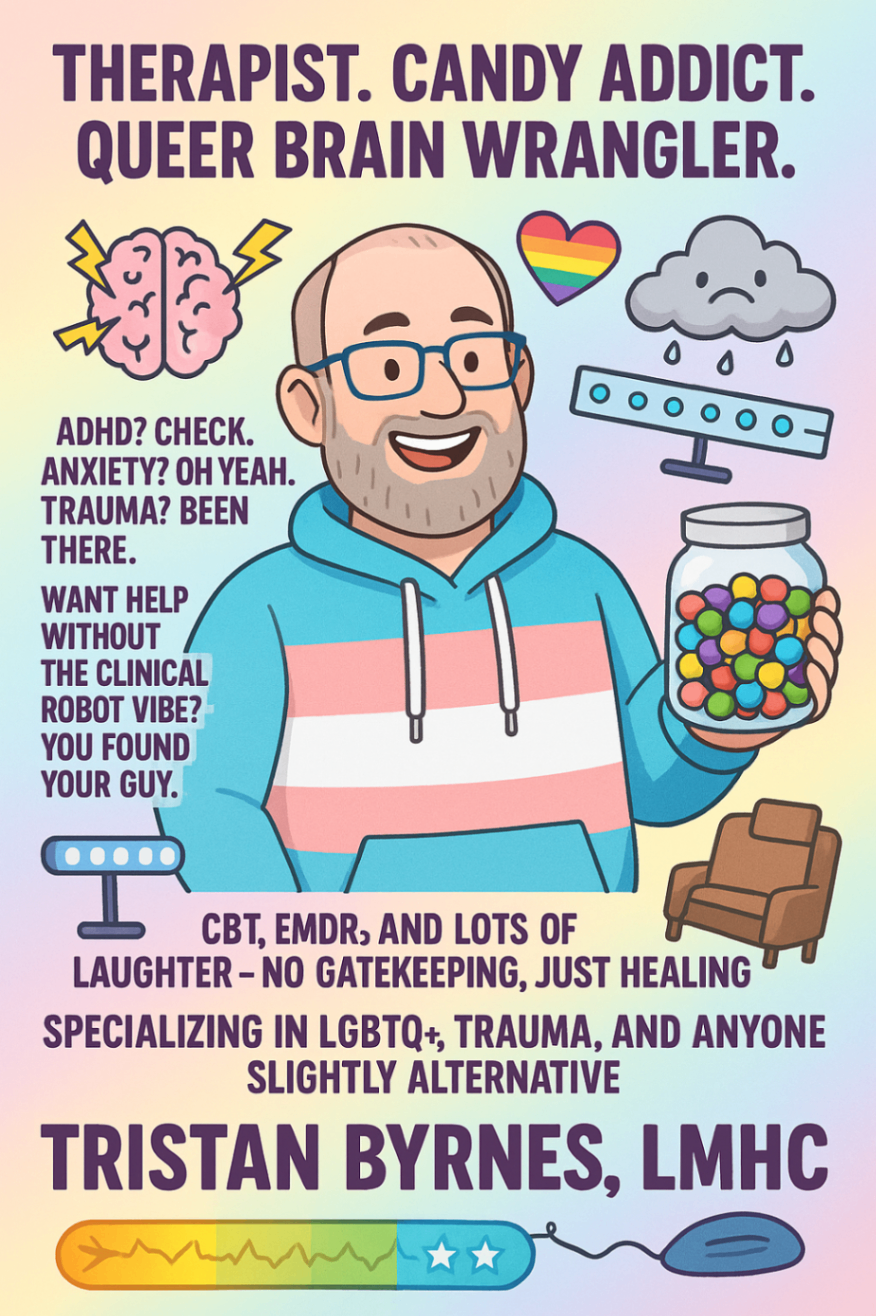
I’ll be vulnerable with you: I didn’t just start Byrnes Counseling Group because I liked the idea of being a boss. I started it because, as a trans man, I knew exactly how hard it was to find a therapist who didn't make me feel like a science experiment.
There is a specific kind of magic that happens when you sit across from a therapist who has shared some of your lived experience. This is why we are proud to be a trans-led practice. When you see one of our LGBTQ therapists, there’s an unspoken shorthand. You don’t have to explain why a certain political headline made you want to hide under your covers for three days. We get it because we felt it, too.
Having a therapist with lived experience means the "Power Dynamic" shifts. It’s not a sterile, white-coat environment. It’s two humans, one of whom has some pretty cool tools to help the other navigate a complex world. You can read more about why I felt this was so important in my post on why lived experience matters in therapy.
The Burden of "The Education Session"
One of the biggest reasons people in our community drop out of therapy is "Education Fatigue."
Imagine you’re going to therapy because you’re dealing with a brutal breakup or a stressful job. But instead of talking about your feelings, you spend forty-five minutes explaining to your therapist what "non-binary" means, or why your "chosen family" is more important to you than your biological one. You walk out of the session with a lighter wallet and a heavier heart because you did all the work.
Identity-affirming therapy means the therapist has already done the homework. We stay up to date on gender identity training and community issues so you don’t have to be the professor.

It’s Not Just About Who You Love, But How You Live
Identity-affirming care doesn't stop at the "L" or the "G." It extends to how we structure our lives and our bodies. This includes:
- Relationship Affirmation: Whether you are monogamous, polyamorous, or practicing ethical non-monogamy (ENM), your relationship structure is valid. We won't blame your relationship style for your depression.
- Kink-Awareness: Your kinks and BDSM dynamics aren't something to be "cured." They are parts of your expression and connection, and they are welcome in the room.
- Neurodivergence: So many of us in the queer community also navigate the world with ADHD or Autism. Affirming care means recognizing how these identities intersect. (Check out our post on neurodivergent adults for more on that!)
Finding Your Way in Florida (Yes, Even Now)
I know, I know. Being LGBTQ+ in Florida right now feels… heavy. It can feel like the state is actively trying to make it harder for us to access the care we need.
That is exactly why we’ve committed to providing telehealth services across the entire state of Florida. Whether you’re in the heart of Orlando, the suburbs of Tampa, or a small town where you feel like the only queer person for miles, you have access to affirming care.
You don’t have to settle for the one therapist in your town who "doesn't mind" that you're gay. You deserve someone who specializes in you. Telehealth allows us to bring the cozy, safe vibe of our office right to your living room (or your car, or your closet, wherever you feel safe talking).
How to Spot a Truly Affirming Therapist: A Checklist
If you’re out there searching for a therapist, here are a few "green flags" to look for:
- Lived Experience: Do they mention being part of the community or having a specific passion for LGBTQ+ issues?
- Language: Do they ask for your pronouns and name (and actually use them)? Is their intake paperwork inclusive of different genders and relationship statuses?
- Intersectionality: Do they acknowledge that being a Black trans woman is a different experience than being a white cis gay man? (If they treat everyone exactly the same, they aren't being affirming, they’re being colorblind/identity-blind).
- No Gatekeeping: Do they believe in your autonomy? For example, do they follow a "no gatekeeping" approach for HRT or surgery letters?
- Humor and Humanity: Do they feel like a real person? (Okay, this one is a Tristan-special, but seriously, if you can’t laugh with your therapist, how are you going to cry with them?)
Join Us for the Rest of the Week
This is just the beginning. The Authenticity Toolkit is all about giving you the resources to build a life that feels like yours. Tomorrow, we’re diving into the heavy stuff: trauma and how EMDR therapy can be a game-changer for LGBTQ+ survivors.
If you’re ready to stop explaining yourself and start healing, we’re here. You can check out our full list of services or reach out to us directly through our contact page.
Finding a therapist who truly gets you isn't a luxury: it’s a necessity. Your identity isn’t a barrier to your mental health; it’s the most beautiful part of who you are. Let's find a way to make sure it stays that way.
Stay tuned for more this week, and remember: you aren’t alone, and you definitely don’t have to do this by yourself. 🏳️⚧️🏳️🌈