
Welcome to Day 2 of our Authenticity Toolkit week! If you caught yesterday’s post, we talked about why finding a therapist who actually "gets it" is the foundation of everything else. Today, we’re going a layer deeper. We’re moving past just talking about our problems and looking at how we actually heal them from the inside out.
If you’ve ever felt like you’ve talked a trauma to death in therapy but your body still reacts like it’s happening right now, you aren't alone. For many of us in the LGBTQ+ community, trauma isn't just a single "big" event; it’s the constant, low-grade hum of existing in a world that wasn't built for us. It’s the hypervigilance we carry into every grocery store or family dinner.
That’s where EMDR therapy for trauma comes in. As a trans-led practice here at Byrnes Counseling Group, we know that traditional talk therapy is great, but sometimes your nervous system needs a different kind of intervention.
When Talk Therapy Hits a Wall
Don’t get me wrong, I love a good vent session as much as the next person. But have you ever noticed that you can intellectually understand something (like "it wasn't my fault" or "I am safe now") but your heart still races when you hear a certain tone of voice? Or your stomach knots up when you see a specific street corner?
That’s because trauma doesn't live in the logical, "thinking" part of your brain. It lives in the limbic system, the part of the brain responsible for survival. When we experience something traumatic, especially the kind of "minority stress" we face as queer and trans folks, our brain can get "stuck." It’s like a computer program that crashed and keeps trying to reload the same error message over and over.
Traditional talk therapy works from the top down (brain to body). EMDR, which stands for Eye Movement Desensitization and Reprocessing, works from the bottom up (body to brain). It’s about helping your brain finally file those old, "stuck" files into the "past" folder so they stop popping up as active threats.
Why EMDR Therapy for Trauma is a Game-Changer for Our Community
For LGBTQ+ people, trauma often looks like a collection of "micro" events that pile up over time. It’s the rejection from a religious institution, the awkward "coming out" that didn't go well, or the constant masking we do to stay safe. This is often called "Complex Trauma" or C-PTSD.
Here is why trauma-informed therapy for LGBTQ+ individuals specifically benefits from EMDR:
1. It Tackles the "Shame Spiral"
Many of us grew up with the message that who we are is fundamentally "wrong" or "too much." Even after we come out and find our community, those old messages can stay lodged in our psyche as "internalized homophobia" or "internalized transphobia." EMDR helps us find those specific moments where we learned to feel ashamed and reprocesses them. Instead of the core belief being "I am broken," we move toward "I am whole and resilient."
2. It’s Not Just for "Big T" Trauma
People often think EMDR is only for soldiers or survivors of major accidents. But in our community, the "Small t" traumas, the daily slights, the workplace misgendering, the feeling of being "othered", are just as damaging because they are chronic. EMDR is incredibly effective at taking the "sting" out of these recurring stressors.
3. It Respects Your Nervous System
If you’ve spent years masking for safety, your nervous system is likely on high alert. EMDR starts by building "Resources." We don't just dive into the hard stuff. We spend time building a "Safe State" or a "Calm Place" in your mind first. We make sure you have the tools to ground yourself before we ever touch a traumatic memory.
How Does It Actually Work? (The "Magic" of Bilateral Stimulation)
I know, "bilateral stimulation" sounds like something out of a sci-fi movie. But it’s actually pretty simple. When you're in an EMDR session, your therapist will guide you through side-to-side eye movements, hand taps, or even audio tones.
While this is happening, you’re holding a "slice" of a traumatic memory in your mind. The side-to-side movement mimics what happens during REM sleep (when your brain naturally processes your day). It allows your brain to "unstick" the memory.
Think of it like this: A traumatic memory is like a jagged, hot coal sitting in your hand. You can’t stop thinking about it because it hurts. EMDR doesn't make you forget the coal exists, but it lets the coal cool down and rounds off the edges. Eventually, it just feels like a regular old rock. You can put it in your pocket or set it down. It’s still there, but it’s not burning you anymore.

Mapping the Trauma in the Body
One of the coolest parts of trauma-informed work is realizing where you hold your stories. Are you a "shoulders-up-to-your-ears" person? Do you get that "pit in your stomach"?
In our sessions, we often look at how emotions map onto the body. For LGBTQ+ survivors, shame often feels like a heavy weight in the chest, while anxiety might feel like a buzzing in the limbs. By using EMDR, we can target these physical sensations directly.
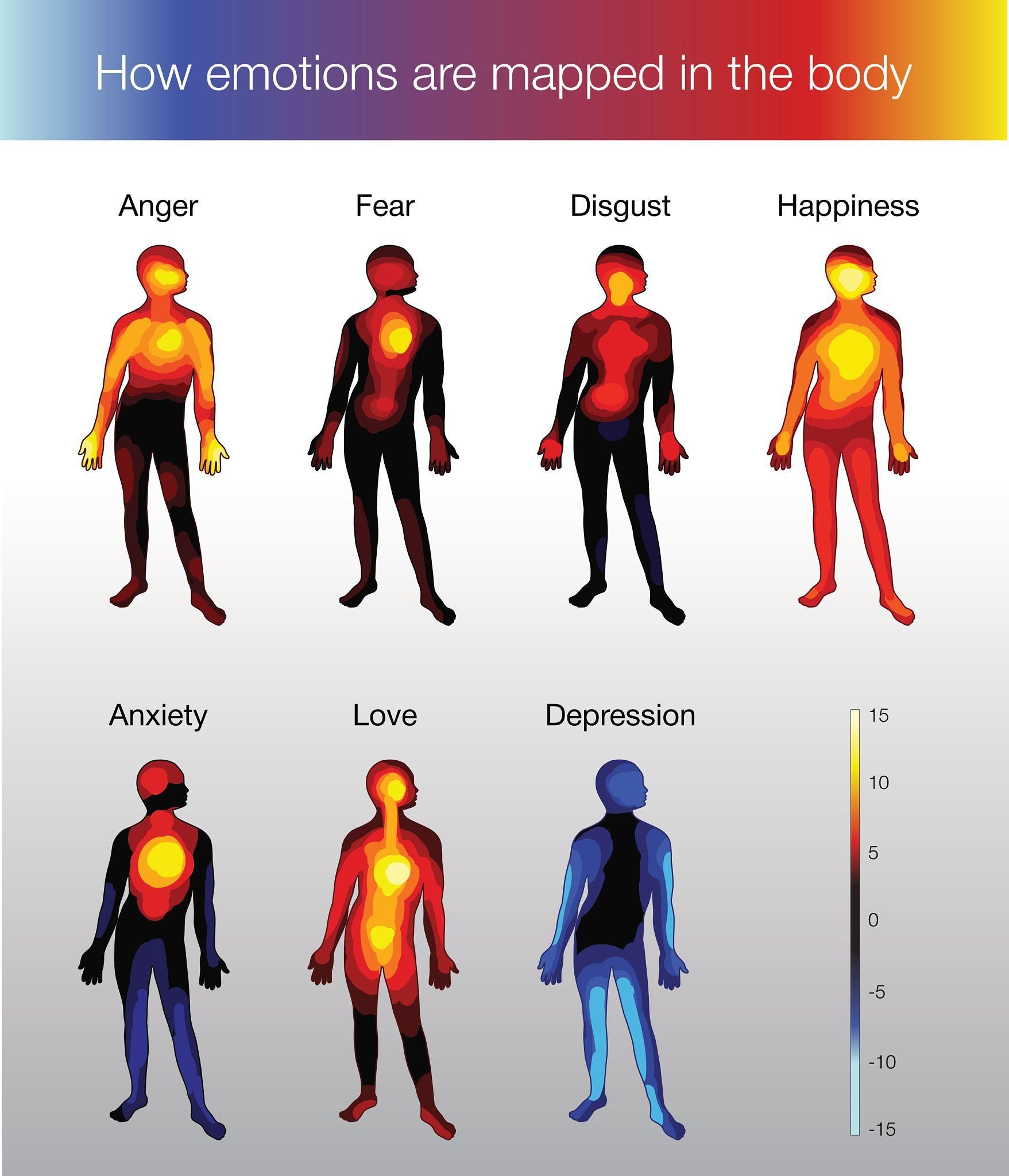
When we reprocess a memory, we aren't just changing your thoughts, we’re literally changing how your body feels when you think about it. That’s the "healing from the outside in" part. When your body finally feels safe, your brain can finally stop scanning for exits.
But… Do I Have to Re-Live Everything?
This is the #1 question I get. The short answer? No.
One of the best things about EMDR is that you don't have to give me every single detail of the trauma for it to work. We focus on the sensations, the beliefs, and the feelings. If you don't want to talk about the specifics of a painful event, you don't always have to. Your brain knows what it’s doing; the bilateral stimulation just gives it the "nudge" it needs to start the cleaning process.
This is especially helpful for those of us who are tired of explaining our lived experience to therapists who don't get it. At Byrnes Counseling Group, being trans-led means we already understand the context of your life. We don't need you to explain why a certain political event or a "look" from a stranger was traumatic, we already know. We can get straight to the healing.
Telehealth and EMDR: Healing from Your Own Couch
A lot of people ask if EMDR can even work over a screen. The answer is a resounding yes. In fact, many of my clients prefer doing EMDR via telehealth.
Why? Because you’re in your own space. You have your own blankets, your own fidget toys, and maybe even your cat sitting next to you. Trauma work is vulnerable, and there is something incredibly empowering about doing that work in the place where you feel most secure.
We offer telehealth throughout the entire state of Florida. Whether you’re in Miami, Orlando, or a small town where there isn't an affirming therapist for miles, we can work together. We use specialized, HIPAA-compliant software that allows us to do the bilateral stimulation right through your computer screen.

You Are Not Broken
If you take one thing away from today’s post, let it be this: Your brain’s response to trauma is actually a sign of how hard it’s trying to protect you.
Hypervigilance is just your brain trying to keep you from getting hurt again. The shame you feel was likely a tool you used to survive an environment that wasn't safe for your authentic self. You aren't "messed up," and you don't need to be "fixed." You just need to give your brain the chance to catch up to the fact that you are safe now.
EMDR is one of the most powerful tools in our Authenticity Toolkit because it honors your past while clearing the way for your future. It helps you stop living in "survival mode" so you can start living in "authentic mode."
If you’re ready to stop just talking about the past and start moving through it, we’re here to help. Reach out to us at Byrnes Counseling Group to learn more about how we use EMDR to support our community.
Coming up tomorrow for Authenticity Toolkit Week: We’re diving into the world of Polyamory and Relationship Transitions. How do we navigate "the talk," set boundaries, and keep our relationships healthy and affirmed? See you then!