

If I had a nickel for every time a client sat on my couch: or joined a telehealth session from their car: and started with the phrase, “I mean, I know some people have it way worse, but…” I’d probably be writing this blog post from a private island in the Keys.
But here we are in Central Florida, and I’m still hearing it.
Welcome to Part 4 of our series: Therapy isn’t just for when there’s a crisis. Today, we’re tackling the "Suffering Olympics." It’s that internal voice that tells you that unless you’re in the middle of a five-alarm emotional fire, you don’t "deserve" to take up space in a therapist's office.
As a trans-identified therapist and the owner of Byrnes Counseling Group, I see this every single day: especially in our LGBTQ+ community. We are experts at minimizing our own pain. We’ve been conditioned to think that if we aren’t facing a life-threatening emergency, we should just "suck it up" and keep moving.
Spoiler alert: You don't have to be "that bad" to deserve to feel better.
The Comparison Trap: Why We Grade Our Suffering
Psychologists call this "comparative suffering." It’s the habit of evaluating whether your pain is “legitimate enough” by comparing it to someone else’s.
You might say things like:
- "At least I have a job; I shouldn't be this stressed about my boss misgendering me."
- "Other trans folks are facing literal violence; my anxiety about a family dinner is just me being dramatic."
- "I'm lucky to live in Florida where I have some community, so I shouldn't be upset about these new laws."
Here’s the thing: Pain is not a pie. If you acknowledge your own hurt, you aren't taking a "slice" of empathy away from someone else. In fact, when we minimize our own experiences, we actually reduce our capacity for empathy. Why? Because we’re teaching ourselves that feelings are things to be judged and ranked rather than felt and processed.

The LGBTQ+ Context: Minority Stress and the "I’m Fine" Mask
In Florida, being LGBTQ+ comes with a specific kind of background noise. We call this minority stress. It’s the extra layer of exhaustion that comes from navigating a world (and a political climate) that isn’t always built for you.
When you deal with microaggressions every day: the "accidental" wrong pronoun, the weird look at the grocery store, the news notification about another bill targeting your healthcare: it adds up. But because these things often feel "small" or "subtle," we tend to dismiss them.
We tell ourselves we're "too sensitive." We think we’re overreacting. But these aren’t just "small things." They are constant drains on your battery. When you wait until your battery is at 0% to seek identity-affirming therapy, you’re trying to build a house in the middle of a hurricane.
At Byrnes Counseling Group, we’re a trans-led practice. We get it. We know that "just a comment" isn't ever just a comment. It’s a weight. And you don’t have to wait until that weight crushes you to ask for help carrying it.
The Danger of "Not That Bad"
When we minimize our pain, we don't actually make it go away. We just push it down. And where does it go?
- Into your body: That chronic shoulder tension, the tension headaches, the "mystery" stomach issues, and the absolute exhaustion that a nap won't fix.
- Into your relationships: When we're "fine" but actually hurting, we become irritable, withdrawn, or hyper-vigilant with the people we love.
- Into burnout: If you only seek help when you're in a crisis, you're living in a cycle of "collapse and recover."
Minimizing your pain is actually a form of self-gaslighting. You’re telling your brain and your nervous system that their signals don’t matter. Over time, your brain stops trusting you, and you start feeling disconnected from your own life.

How to Stop Minimizing (And Start Healing)
Breaking the habit of comparative suffering isn't something that happens overnight, but you can start today with these three shifts:
1. Ditch the Disclaimers
Next time you talk about your day, try to describe your feelings without saying "but" or "at least."
- Instead of: "I’m really sad about that breakup, but at least I still have my health."
- Try: "I am really sad about this breakup. It hurts."
Period. End of sentence. Your feelings don't need a justification to exist.
2. Recognize Minority Stress as a Legitimate Stressor
If you are neurodivergent, queer, trans, or living in an alternative relationship structure like polyamory, your baseline level of stress is higher than the average person's. That is a fact, not a personal failing. Give yourself permission to be tired. Give yourself permission to be affected by the world around you.
3. Practice "Both/And"
You can be grateful for the good things in your life and still be struggling with your mental health. These two things coexist all the time.
- "I love my partner and I am feeling deeply lonely right now."
- "I am safe today and I am anxious about the future."
Why This is the Perfect Time for Therapy
Waiting for a crisis to start therapy is like waiting for your car to explode before you get an oil change. Sure, we can help you when things are exploding: we’re good at that: but wouldn't you rather prevent the explosion in the first place?
LGBTQ therapy in Florida isn't just about "fixing" problems. It's about:
- Validating your lived experience.
- Building a toolkit for resilience before you need it.
- Learning how to listen to your body before it has to scream at you.
- Creating a space where you don't have to explain your identity before you start the work.
Whether you're looking for EMDR therapy to process past trauma or just need a safe place to untangle the "minor" stresses of being a human in 2026, we’re here.

A Personal Note from Tristan
I’ve spent a lot of my life: both before and after my transition: trying to be the "tough one." I thought that if I admitted I was struggling with "small" things, I was being weak or ungrateful for the progress I’d made.
What I learned (the hard way, usually) is that the "small" things are actually the big things. They’re the bricks that build the wall between you and your joy.
At Byrnes Counseling Group, we don’t care where you fall on the "suffering scale." If you’re hurting, if you’re tired, or if you’re just "okay" but know you could be better: that’s enough for us. You are enough for us.
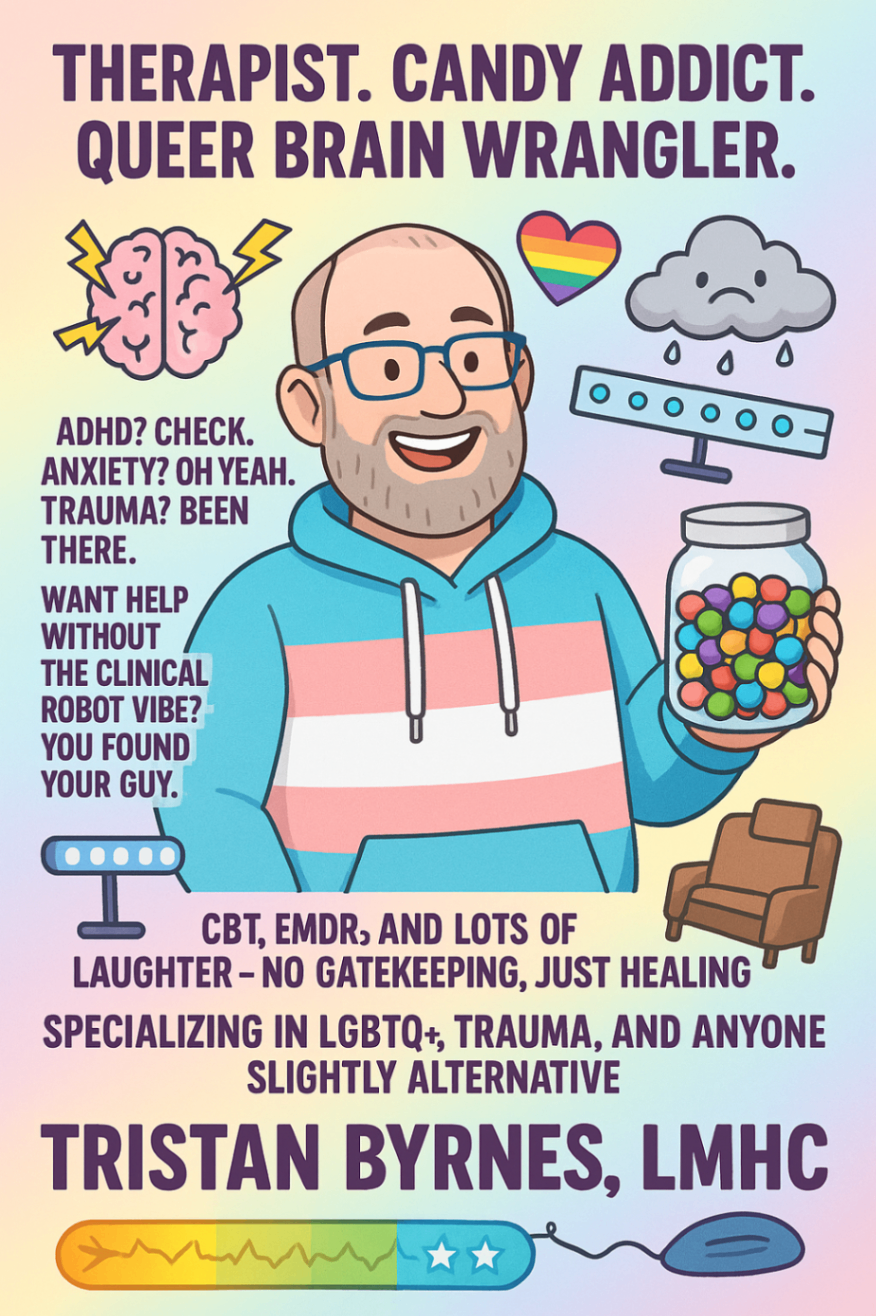
Stop waiting for things to get "bad enough." Your pain is valid right now. Your peace is worth it right now.
Ready to stop minimizing and start healing? Reach out to us today to schedule a session. We offer telehealth across all of Florida and in-person sessions in our inclusive, affirming office. Let's get you off the "at least" treadmill and into a space where you can actually breathe.