
Let's be real for a second: finding a therapist is hard enough. Finding one who actually gets what it's like to be trans? That narrows the pool significantly. Now add neurodivergence, ADHD, autism, AuDHD, into the mix, and suddenly you're looking for a very specific unicorn.
Here's the thing: you're not asking for too much. You deserve a therapist who doesn't just "tolerate" your identities or treat them as separate issues to tackle one at a time. You deserve someone who understands how being trans and neurodivergent shapes your entire experience of moving through the world.
As a trans therapist myself, I've sat on both sides of the couch. I know how exhausting it is to educate your own therapist about basic terminology, or to feel like you have to mask your neurodivergent traits just to be taken seriously. That's not therapy, that's a second job you didn't sign up for.
So let's break this down into five actual, doable steps to find a therapist who truly understands the beautiful, complicated intersection of trans and neurodivergent life.
Why This Intersection Matters (A Lot)
Before we dive into the steps, let's talk about why finding someone who understands both identities is so important.
Trans and neurodivergent experiences don't exist in separate little boxes. They're woven together in ways that can be hard to articulate, even to yourself. Maybe your autism made it harder to recognize your gender identity because you were already so focused on masking and fitting in. Maybe your ADHD means you struggle with the executive function required to navigate gatekeeping healthcare systems. Maybe sensory issues make binding or tucking feel impossible some days.

A therapist who only understands trans issues might pathologize your neurodivergent traits. A therapist who only understands neurodivergence might accidentally misgender you or not understand why access to gender-affirming care is urgent. You need someone who can hold both pieces at once, without making you feel like a case study.
The good news? These therapists exist. Let's find them.
Step 1: Use Specialized Directories and Platforms
Google is fine for finding pizza places, but for finding affirming mental health care? You need better tools.
Start with directories that specifically focus on LGBTQIA+ and neurodivergent-affirming therapists. Platforms like Inclusive Therapists let you filter for providers with verified expertise in both areas. Psychology Today also has a search function where you can filter for transgender specialists, though you'll want to do some additional vetting (more on that in a sec).
These specialized directories often provide detailed bios where therapists share their specific training, areas of focus, and sometimes even lived experience. That last part? Chef's kiss. There's something powerful about working with someone who's been where you are.
Pro tip: Don't just search for "LGBTQ+" as a blanket term. Look for therapists who specifically mention trans, nonbinary, or gender-diverse clients. "LGBTQ-friendly" can sometimes mean "I took a one-hour webinar five years ago."
Step 2: Look for "Dual Affirmation" Language
This is where you put on your detective hat and actually read those therapist profiles.
You're looking for language that indicates the therapist understands the intersection, not just the individual pieces. The most effective therapists explicitly state they work with "queer and neurodivergent" or "trans and neurodiverse" populations as a specific area of focus, not just two items on a long checklist of things they technically treat.
Watch for phrases like:
- "Neurodiversity-affirming"
- "Gender-affirming care"
- "Non-pathologizing approach"
- "Strengths-based"
Red flags to watch out for:
- Language about "treating" or "managing" gender dysphoria as if it's the problem (spoiler: often the problem is lack of access to care and societal nonsense)
- Outdated terminology
- No mention of neurodivergence at all when you've specifically searched for it
Your gut matters here. If something feels off about how they describe their work, trust that instinct.
Step 3: Verify Specific Qualifications and Experience
Okay, I know "verify qualifications" sounds boring and clinical, but hear me out, this step can save you a lot of wasted time and money.
First, check that the therapist holds relevant credentials. Look for licenses like LMHC (Licensed Mental Health Counselor), LCSW (Licensed Clinical Social Worker), LMFT (Licensed Marriage and Family Therapist), or LPC (Licensed Professional Counselor). These mean they've completed actual graduate training and are accountable to licensing boards.
Beyond the basic credentials, dig into their specialized training. Have they completed specific education in gender identity? Do they have training in working with autistic adults or ADHD?
Also consider what services you might need from them:
- Can they write gender-affirming care letters if needed?
- Are they qualified to do ADHD or autism assessments, or can they refer you to someone who is?
- Do they offer EMDR or other trauma-informed modalities?

Speaking of trauma, many trans and neurodivergent folks carry complex trauma from years of masking, discrimination, and navigating systems that weren't built for us. A therapist who understands trauma-informed care is often essential.
Step 4: Review Treatment Modalities and Approach
Not all therapy styles are created equal, especially for neurodivergent brains.
Look for therapists who use approaches that actually work well for how your brain operates. Some solid options include:
- DBT (Dialectical Behavior Therapy): Great for emotional regulation and distress tolerance
- ACT (Acceptance and Commitment Therapy): Focuses on values and psychological flexibility
- EMDR: Helpful for processing trauma without having to verbally rehash every detail
- CBT (Cognitive Behavioral Therapy): Can be useful, though some neurodivergent folks find it needs to be adapted
The key thing to look for is a non-pathologizing, strengths-based model. Your therapist shouldn't be trying to "fix" your neurodivergence or convince you that your gender identity is a phase or a symptom of something else. (Yes, that still happens. No, it's not okay.)
A good therapist sees your trans identity and your neurodivergence as parts of who you are: not problems to be solved.
Step 5: Schedule a Consultation and Ask Questions
Here's where you actually talk to a human! Most therapists offer free initial consultations, and you should absolutely take advantage of this.
Think of it like a first date, but with less awkward small talk and more direct questions. Here are some things you might ask:
- "Do you have experience working with clients who are both trans and neurodivergent?"
- "How do you approach gender-affirming care?"
- "What does neurodiversity-affirming practice look like in your work?"
- "Do you have any lived experience in either community?" (Totally okay to ask!)
- "What are your fees, and do you offer sliding scale or take my insurance?"

Pay attention to how they respond. Do they seem comfortable with these questions? Do they give specific, thoughtful answers or vague, rehearsed ones? Do you feel like you can actually be yourself with this person?
Trust your gut. Therapy only works if you feel safe enough to be honest.
You Deserve a Therapist Who Actually Gets It
Finding the right therapist when you're trans and neurodivergent isn't about lowering your standards: it's about finding someone who meets you where you are without requiring you to explain your entire existence in the first session.
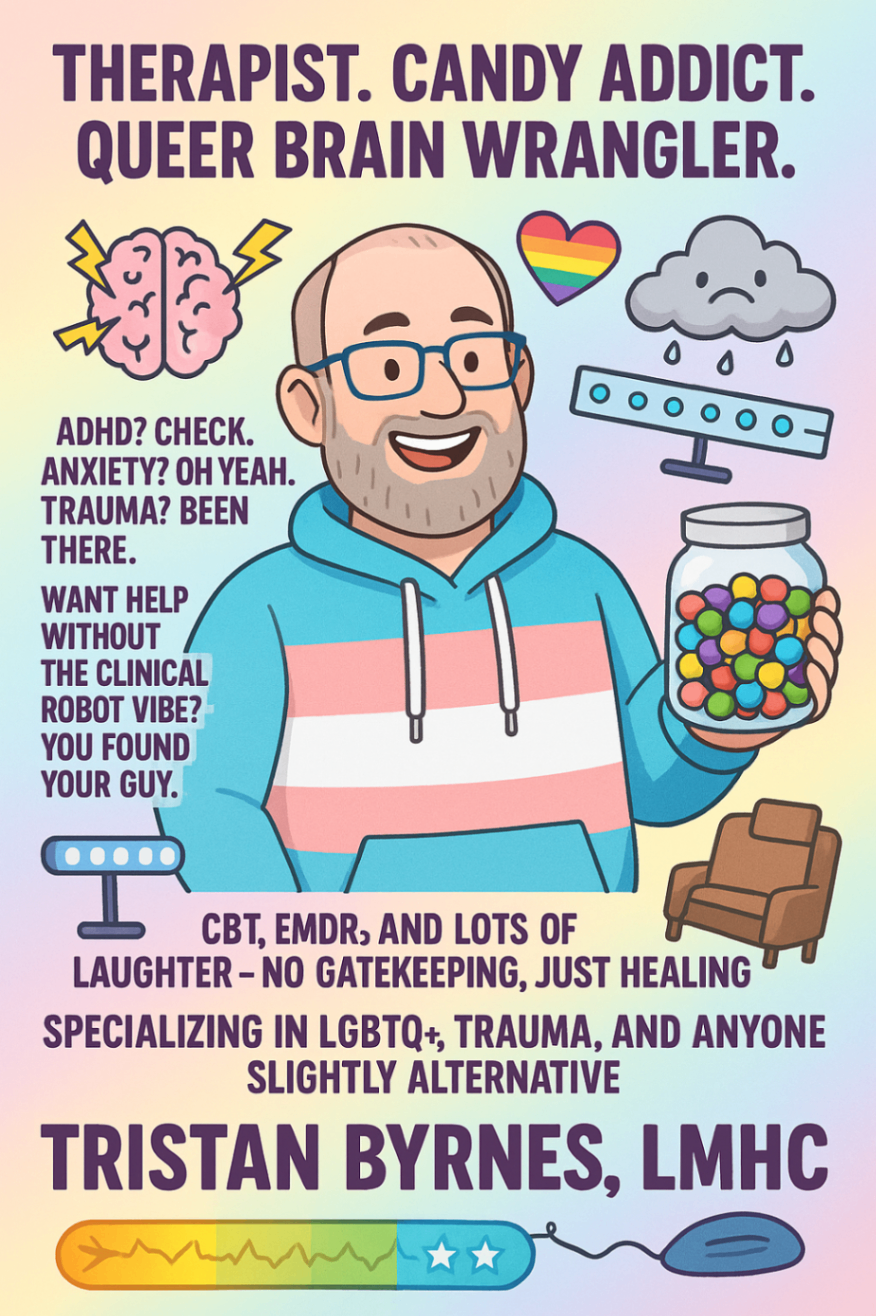
At Byrnes Counseling Group, this intersection is literally our specialty. As a trans-led practice, we're not just "affirming" on paper: we live this stuff. We get the nuances, the overlapping challenges, and the unique joys of neuro-queer life. No gatekeeping, no judgment, just real support from people who understand.
Ready to stop searching and start healing? Reach out to us and let's chat about what support could look like for you.
You've spent enough energy masking and explaining yourself. It's time to find a space where you can just be.