
Part 1 of our Neuro-Queer series on finding a therapist who actually gets it.
Let's be real for a second: finding a therapist who understands your trans identity is hard enough. Finding one who also gets your ADHD brain, your autism, or your sensory needs? That can feel like searching for a unicorn in a haystack. While the haystack is on fire. And you're overstimulated.
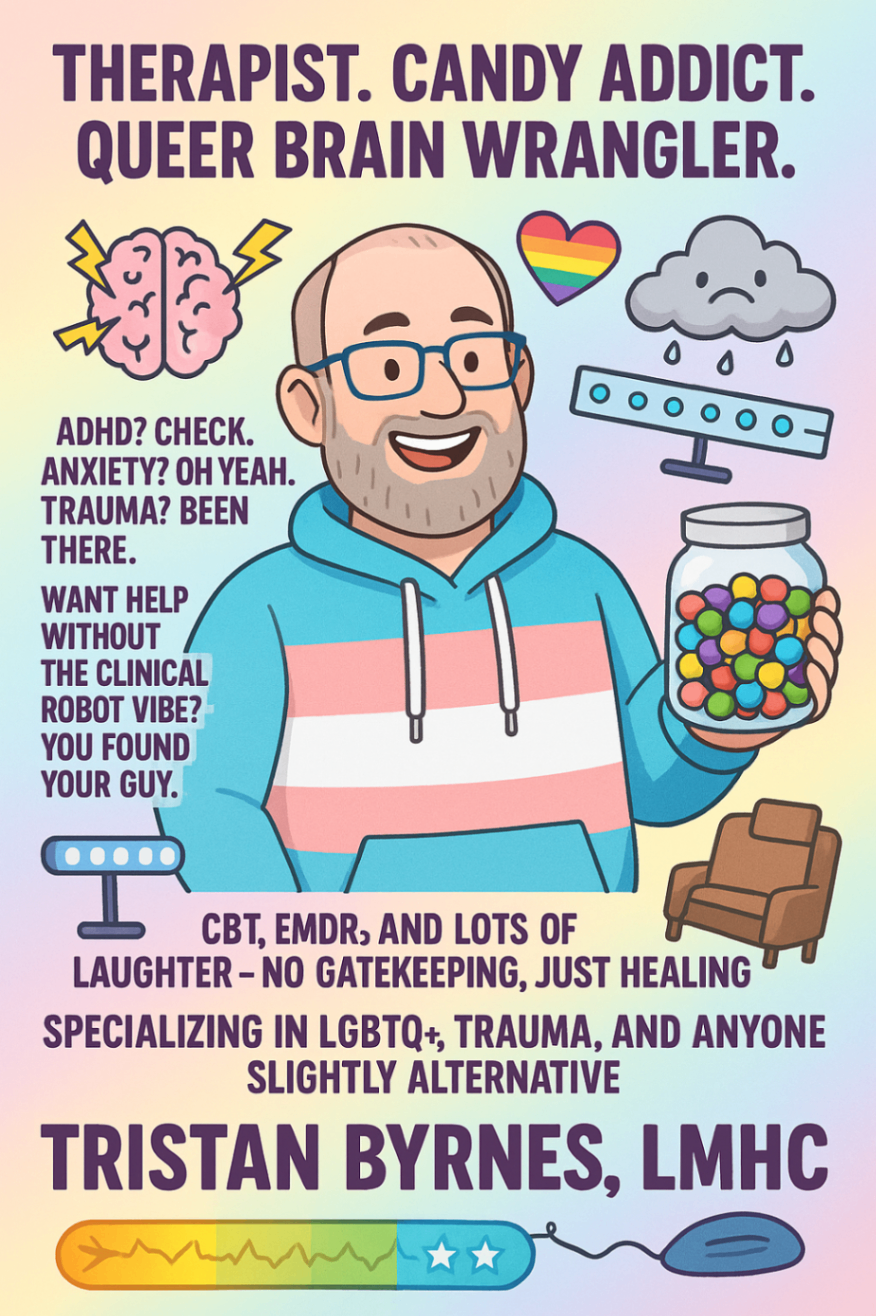
I get it. As a trans therapist who works with neurodivergent clients every day, I've heard the horror stories. The well-meaning therapist who asked you to explain what "non-binary" means for the third session in a row. The one who suggested your gender exploration was "just a special interest." The one who made you sit under fluorescent lights while asking why you seemed "distracted."
Yeah. We can do better than that.
The good news? There are therapists out there who understand the intersection of being trans and neurodivergent, and this guide is going to help you find them. Consider this Part 1 of your roadmap: the logistics, the directories, and the exact questions to ask before you commit to that first real session.
Why This Search Feels So Hard
Here's the thing nobody tells you: most therapist directories weren't built with us in mind. They were designed for a world where you pick one filter, anxiety, depression, LGBTQ+, and call it a day. But when you're navigating multiple marginalized identities, you need someone who understands how those pieces fit together.
Being trans isn't inherently traumatizing. Being neurodivergent isn't a disorder that needs "fixing." But existing in a world that wasn't built for either of us? That can absolutely take a toll. You deserve a therapist who celebrates who you are rather than tolerating you conditionally, someone who sees your neurotype and your gender as parts of yourself that deserve understanding, breathing room, and care.
So let's get into the practical stuff.
Step 1: Start With the Right Directories
Not all therapist directories are created equal. If you're searching on a generic platform, you might find someone who checked the "LGBTQ+" box during their profile setup but hasn't actually done the work.
Here's where to start your search:
Inclusive Therapists (inclusivetherapists.com)
This directory was specifically created for marginalized communities. You can filter by gender identity, neurodivergence, and therapeutic approach. The therapists here have generally done more intentional work around identity-affirming care.
Psychology Today (psychologytoday.com)
Yes, it's the big mainstream one: but it's also the most comprehensive. The key is knowing how to use the filters (more on that in Step 2). It's a good starting point, but always dig deeper into individual profiles.
Neurodivergent Therapists Directory (ndtherapists.com)
This one pre-screens all providers to confirm licensure and specifically lists therapists experienced with neurodivergent clients. Many of these therapists are neurodivergent themselves.
Zencare (zencare.co)
Allows you to filter by multiple specialties and often includes video introductions so you can get a vibe check before reaching out.
GALAP (Gender Affirming Letter Access Project)
While primarily focused on letters for gender-affirming care, their provider list includes therapists who have demonstrated competency in trans-affirming approaches.

Step 2: Use the Right Filters (And Read Between the Lines)
Once you're on a directory, here's how to actually use those filters:
Filter for:
- LGBTQ+ / Gender Identity / Transgender
- ADHD / Autism / Neurodivergent
- Trauma-Informed or EMDR (if that's relevant to your needs)
- Sliding scale or your insurance (let's be practical here)
Then read the actual profile. This is where people skip ahead and regret it later. Look for:
- Specific mention of trans clients, not just "LGBTQ-friendly." There's a difference between someone who's done the training and someone who added a rainbow flag to their website in June.
- Language around neurodivergence as a difference, not a deficit. If their profile talks about "treating" autism or "managing" ADHD symptoms without any mention of acceptance or strengths-based approaches, that's a yellow flag.
- Their own identity or lived experience. Many affirming therapists will share if they're part of the communities they serve. This isn't a requirement, but it can be a green flag.
- Specific modalities like DBT, somatic work, or EMDR that work well for neurodivergent brains.
Pro tip: If their profile mentions "alternative lifestyles" instead of LGBTQ+ identities, keep scrolling. It's 2026. We've moved on.
Step 3: Look for the Right Signals on Their Website
Found someone promising? Great. Now go to their actual website (not just the directory profile) and look for:
- Pronouns listed for the therapist and/or intake forms that ask for yours
- Sensory-friendly office options or telehealth availability
- Content that speaks to your experience: blog posts, resources, or language that shows they understand the intersection of gender and neurodivergence
- Clear statements about their approach to gender-affirming care (no gatekeeping, informed consent model, etc.)
If their website looks like it was last updated in 2015 and mentions nothing about the populations you're part of, that might tell you something about where their priorities are.
Step 4: Schedule That Free Consultation
Most affirming therapists offer a free 15-minute consultation call. This is your chance to vet them before committing your time, energy, and money to a full session.
Think of this like a first date: but instead of wondering if they're going to text you back, you're figuring out if they're going to make you explain what "masking" means every session.
Here's what to pay attention to during the call:
- Do they use your correct name and pronouns without hesitation?
- Do they seem comfortable discussing both gender and neurodivergence?
- Do they ask clarifying questions that show curiosity, not ignorance?
- Does their communication style work for your brain? (Some of us need direct and to-the-point. Some need more processing time. Both are valid.)
And most importantly: trust your gut. If something feels off in a 15-minute call, it's probably not going to magically get better in session three.
Step 5: Ask These 5 Questions
This is the practical magic right here. During your consultation, ask these specific questions to vet for both LGBTQ+ and neurodivergent competency:
1. "What's your experience working with trans and/or non-binary clients?"
Listen for specifics. Have they worked with people in various stages of transition? Do they understand that not everyone wants or needs medical intervention? Are they familiar with the informed consent model?
2. "How do you approach neurodivergence in your practice?"
You want to hear strengths-based language. Words like "differences," "accommodation," and "support" are good. If they jump straight to "coping skills for deficits," that's worth noting.
3. "What does your intake process look like, and can it be adapted for sensory or processing needs?"
This tells you a lot about their flexibility. Can you fill out forms ahead of time? Can you have your camera off for telehealth? Will they give you time to process questions?
4. "Have you received specific training in gender-affirming care and/or neurodivergent-affirming therapy?"
Training matters. Lived experience matters too, but you want someone who has done the intentional work: not just someone who's "open-minded."
5. "How do you handle the intersection of multiple identities in therapy?"
This is the big one. You want a therapist who understands that being trans and neurodivergent creates unique experiences that can't be addressed by treating each identity separately.

A Note From Our Practice
At Byrnes Counseling Group, we're a trans-led, neuro-inclusive practice that specializes in exactly this intersection. We've built our services around the understanding that you shouldn't have to educate your therapist about your own identity: and you definitely shouldn't have to choose between being seen as trans or neurodivergent.
If you're in Florida and looking for a therapist who gets it, we'd love to connect with you.
Coming Up in Part 2…
Now that you've got the logistics down, Part 2 of this series will focus on the vibe check: those in-session green flags that tell you your therapist actually understands both your trans identity and your neurodivergent brain. Because finding a therapist is one thing. Knowing they're the right fit? That's where the real magic happens.
Stay tuned. 🏳️⚧️✨