
We’ve all been there. You’re at the grocery store, staring blankly at the oat milk options, when you run into someone you haven't seen in a while. They’ve heard the news. They offer a soft, sympathetic, “I’m so sorry for your loss.”
And before you can even process the lump in your throat, your brain kicks into high gear. You see the look of slight discomfort on their face. You feel the weight of their awkwardness. And like an automatic reflex, as natural as breathing, you say:
“Oh, it’s okay. Thank you, though. We’re doing okay.”
But here’s the thing: It’s not okay. You aren’t "fine." And yet, in that split second, you just took on the job of making them feel better about your tragedy.
Welcome to the start of Emotional Sovereignty & Grief Week. Today, we’re talking about the invisible, exhausting work of "managing the room" while your own heart is breaking, and why "Thank You" is a complete: and radical: sentence.
The Invisible Job: Emotional Labor in Loss
In the therapy world, we talk a lot about "emotional labor." Usually, it’s in the context of work or relationships: the effort it takes to keep your face neutral, your tone pleasant, and everyone around you comfortable. But in grief, emotional labor is the silent tax we pay on our own pain.
When we say "it’s okay" to a condolence, we aren't usually lying because we’re manipulative; we’re doing it to be helpful. We’re smoothing over the edges of a conversation that feels too sharp for the other person to hold. We are, essentially, caretaking our comforters.
As a trans-identified therapist, I see this show up in a very specific way within our community. Many of us have spent a lifetime "reading the room" for safety. We’ve become experts at monitoring other people’s moods, tones, and comfort levels just to navigate the world. When grief hits, that "hypervigilance" doesn't just turn off. In fact, it often ramps up. We worry about being "too much," "too messy," or "too loud" in our sadness, so we shrink it down to a size that fits comfortably in someone else’s pocket.

The "Hypervigilance" Connection
If you’ve looked through our Hypervigilance Mini Kit, you know that staying alert to everyone else’s energy is often a survival strategy. It’s your nervous system trying to protect you by making sure everything around you stays calm.
When you're grieving, your nervous system is already under a massive amount of stress. Adding the requirement to "perform" wellness for others is like trying to run a marathon while holding someone else’s luggage. It’s exhausting, and it leads to a specific kind of burnout that makes the grief itself even harder to process.
When we minimize our pain to save others from discomfort, we are practicing self-abandonment. We are telling our own hearts, "Your pain is less important than their convenience."
The Radical Power of "Thank You"
Tristan often shares a simple but profound insight: "Thank you" is a valid response.
Think about the difference:
- "It's okay": This centers the other person. It reassures them that they haven't upset you, that the situation is manageable, and that they can move on without feeling bad.
- "Thank you": This centers the kindness they offered without lying about your reality. It acknowledges their intent while leaving your grief exactly the size it needs to be.
"Thank you" is a boundary. It’s a way of saying, "I hear your care, and I accept it, but I’m not going to pretend I’m fine just to make this interaction easier for you."
It feels weird at first. It feels "rude" to our people-pleasing brains. But there is a deep, quiet power in letting a moment be heavy without trying to lift it for everyone else.
Why We Shrink: The Pressure of Palatability
Why is it so hard to just be sad? Part of it is societal. We live in a culture that treats grief like a cold: something you should "get over" in a few days so you can get back to being a productive member of society.
For those of us in the LGBTQ+ or neurodivergent communities, there’s an added layer. We’ve often been told we’re "too sensitive" or "too dramatic." We might feel like we have to prove our resilience or show that we’re "well-adjusted." This pressure to be "palatable" can make us feel like our grief has to be tidy.
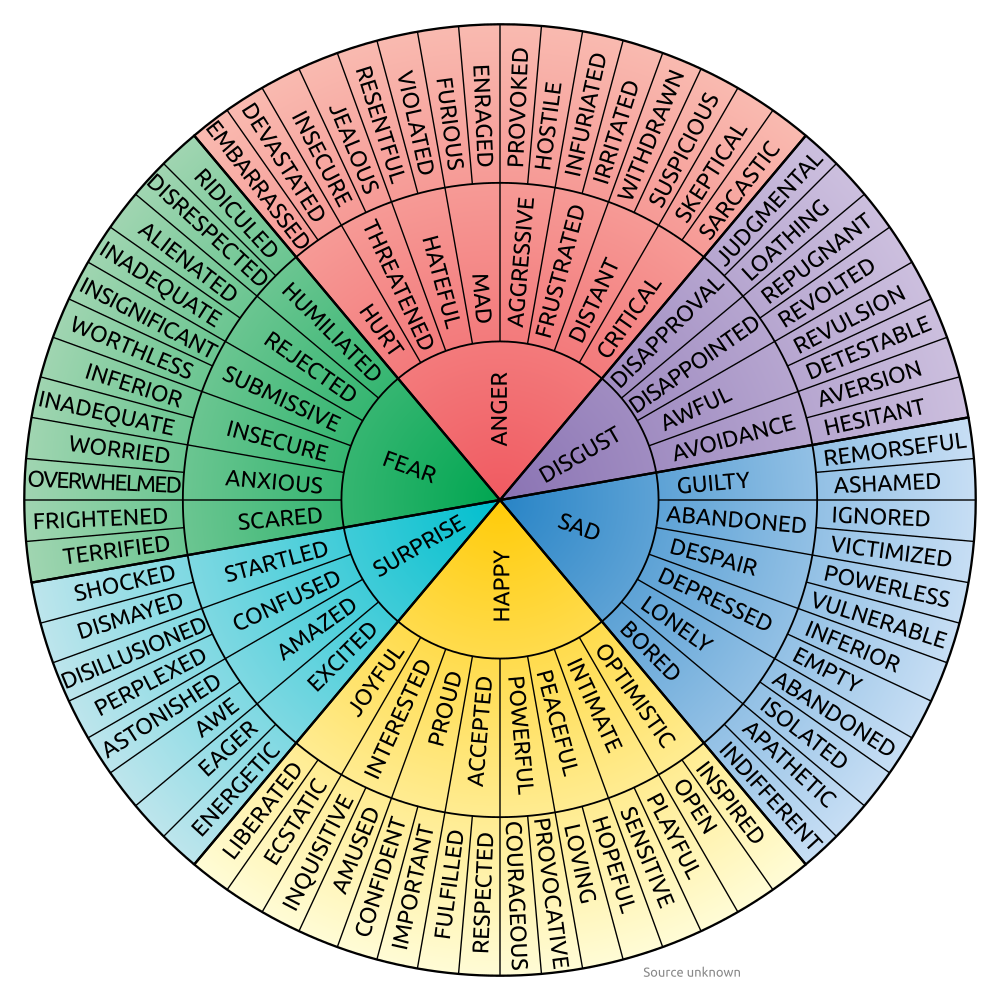
But grief is not tidy. It’s a sprawling, messy, inconvenient thing. It’s an emotion wheel that spins constantly, landing on anger, numbness, relief, and deep sorrow all in the span of a lunch break.
Reclaiming Your Emotional Sovereignty
So, how do we stop the "It's Okay" reflex? It starts with Emotional Sovereignty: the idea that you are the sole owner and authority over your own feelings. You don't owe anyone a specific emotional state.
Here are a few ways to start practicing this:
- Pause Before You Reassure: When someone offers sympathy, take one full breath before you speak. Give your "internal caretaker" a second to stand down.
- Use the "Thank You" Script: Practice saying it out loud. "Thank you for saying that." Period. No "I'm okay" attached.
- Acknowledge the Difficulty: If you want to say more, try, "Thank you. It’s really hard right now, but I appreciate you checking in."
- Check Your Body: Use tools from our Meditation & Grounding Mini Kit. When you feel the urge to "perform," press your feet into the floor. Remind yourself: I am here. I am allowed to feel this. I am safe enough to be sad.
Finding a Space Where You Don't Have to "Manage"
This is exactly why we do the work we do at Byrnes Counseling Group. We know what it’s like to feel like you have to be the "strong one" or the "composed one." Our practice is trans-led and community-focused because we understand that therapy should be the one place where you don't have to manage the vibe.
In our sessions, whether for transgender support or trauma-informed care, you don't have to apologize for your tears, your silence, or your "messiness." You don't have to tell us it's okay. We already know it isn't, and we’re here to sit in that "not-okay-ness" with you.

Join Us for Emotional Sovereignty & Grief Week
This post is just the beginning. All week, we’ll be diving deeper into how we minimize our pain, how to stop people-pleasing your way through depression, and how to set boundaries that actually protect your peace.
Tomorrow, we’ll be talking about "The 'Too Nice' Trap" and how our habit of saving others from their feelings might be contributing to our own anxiety and burnout.
Until then, remember: You are allowed to be hurting. You are allowed to be quiet. And you are definitely allowed to let other people be uncomfortable with your truth.
Need a space to just exist?
Meet our therapists and find someone who gets it.