
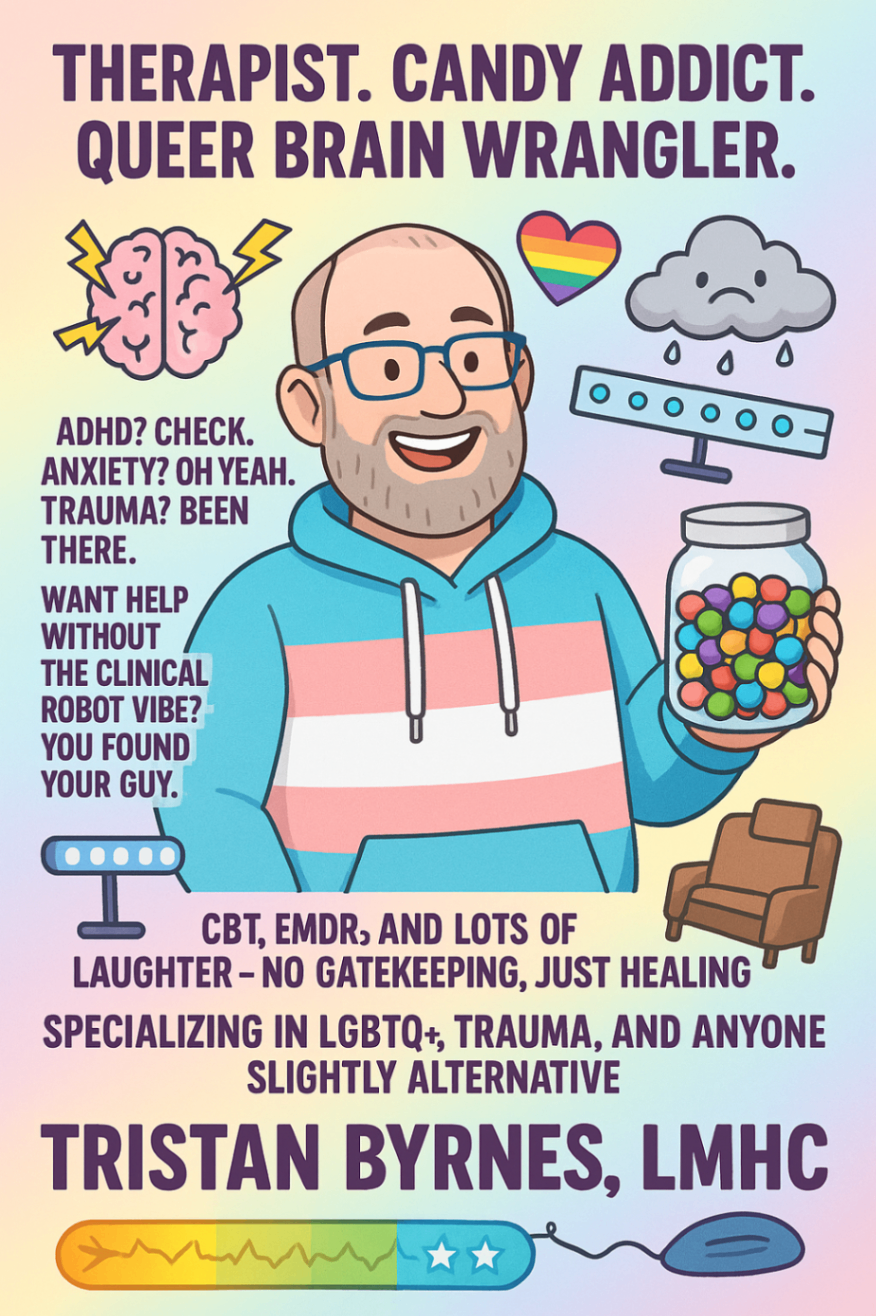
Hey there! Tristan here. If you’ve been hanging around Byrnes Counseling Group for a while, you know we don’t really do "clinical and cold." We’re a trans-led, neuro-spicy, and unapologetically affirming crew. And today, I’m kicking off something I’ve been wanting to do for a long time: Body Liberation Week.
We’re going to spend the next few days diving deep into what it means to actually exist in a body without the constant weight of shame, judgment, or the crushing pressure to "love" every single inch of yourself 24/7.
Let’s start with the big one: why "body positivity" sometimes feels like a total scam, and why body neutrality is the actual game changer we’ve been waiting for, especially for my fellow neurodivergent adults and my LGBTQ+ family here in Florida.
The Problem with "Love Your Body" (The Toxic Positivity Trap)
Don't get me wrong, the body positivity movement did some incredible groundwork. It started as a radical political movement led by fat, Black, queer women to demand space and respect. But, like many radical things, it got a bit… watered down.
Now, "body positivity" often feels like a giant neon sign screaming at you to Love Your Flaws!™ while you’re trying to buy overpriced leggings. For a lot of us, the message shifted from "you deserve rights regardless of your size" to "you are failing if you don't think your cellulite is beautiful."
As a trans therapist who works with a lot of neurodivergent folks, I see the toll this takes. If you’re struggling with gender dysphoria, or if your ADHD brain is currently vibrating because your socks feel "wrong," being told to "love your body" feels like being told to solve a Rubik's cube while underwater. It’s just one more thing to be "bad" at.
What is Body Neutrality, Anyway?
If body positivity is a high-energy pep rally, body neutrality is a quiet afternoon on the couch with a good book and no expectations.
Body neutrality is the radical idea that your body is simply the vessel you move through the world in. It’s the "meat-suit" (said with love!) that houses your amazing brain, your humor, your trauma, and your joy. You don’t have to find it beautiful to respect it. You don’t have to love it to take care of it.
Think of it like this: You might have a car. You might not think it’s the prettiest car in the world. Maybe the paint is peeling, and it makes a weird clunking sound when you turn left. But it gets you to the grocery store. You put gas in it. You change the oil. You don't have to write love poems to the radiator to acknowledge that it’s doing a job.
Why This is a Game Changer for Neurodivergent Adults
For neurodivergent adults, the relationship with our bodies is often… complicated. Many of us struggle with interoception, the sense that tells us what's happening inside our bodies. We might forget to eat until we’re shaking, or not realize we have to pee until it’s an emergency.
When your body feels like a sensory nightmare or a glitchy operating system, "loving" it feels like a tall order. Body neutrality allows us to say:
- "My body is feeling very loud and overstimulated right now. I don't like this feeling, but I can acknowledge it's happening."
- "I am hungry. My body needs fuel. I am going to feed it because that is a functional requirement, not because I 'love' myself."
It takes the emotional labor out of existing. It gives our brains a break from the constant monitoring of "Do I look okay? Do I feel okay? Do I love this?" and moves us toward practical neuro-joy.

Suggested prompt: A person with headphones sitting in a cozy, sensory-friendly room, looking calm and neutral, with diverse body representation.
Trans Identity and the Neutrality Bridge
I want to speak directly to my trans and non-binary siblings for a second. When you’re navigating dysphoria, the "love your body" narrative can feel actively harmful. If your body doesn't align with who you are, or if you're waiting for gender-affirming care that feels light-years away, "loving" that body can feel like a betrayal of your true self.
Body neutrality offers a bridge. You don’t have to love the parts that cause you pain. You can simply exist in them while you work toward the version of yourself that feels more like home. It’s okay for your body to just be a place where you live for now.
In our work at Byrnes Counseling Group, especially within LGBTQ therapy Florida, we focus on this middle ground. We help you find safety in the "right now" body without forcing a fake smile.
Fat Liberation is Non-Negotiable
We can’t talk about body neutrality without talking about fatness. And yeah, I used the word "fat." At our practice, we use that as a neutral descriptor, not a slur.
Diet culture has spent billions of dollars convincing us that being fat is a moral failure. It tells us that we have to "earn" the right to be happy or to be treated with dignity by shrinking ourselves.
Body neutrality says: Your worth is not a math equation.
You deserve a therapist who isn't going to suggest weight loss as a cure for your anxiety. You deserve a doctor who sees past your BMI. You deserve to take up space: physically, emotionally, and energetically. Whether you are fat, thin, disabled, muscular, or somewhere in between, your body deserves to exist without being a "project" that needs constant fixing.

How to Practice Body Neutrality (The "No-Pressure" Guide)
So, how do we actually do this? It’s not about flipping a switch; it’s about micro-shifts in how we talk to ourselves.
- Change the Language: Instead of saying "I hate my stomach," try "This is my stomach. It holds my organs." It sounds dry, but that’s the point. It’s factual.
- Focus on Function (If You Can): If your body allows it, focus on what it does. "My legs got me to the car today." If you live with chronic pain or disability, this might look like, "My body is working hard to keep me going today."
- Curate Your Feed: If you follow "fitspo" accounts that make you feel like garbage, hit that unfollow button. Surround yourself with diverse bodies of all sizes, colors, and abilities. Normalize the reality of human variety.
- Ditch the "Goal Weight" Mindset: Focus on how things feel. Does this shirt feel soft? Does this movement make me feel less stiff? Does this food taste good and give me energy?
- Check Your Sensory Needs: For the neurodivergent crew, body neutrality often starts with sensory comfort. If your clothes are itching or pinching, you're going to be hyper-aware of your body in a negative way. Neutrality is easier when you’re physically comfortable.
The Radical Act of Just Being
At the end of the day, body neutrality is about reclaiming your time and energy. Think about how much brainpower we waste worrying about our appearance or feeling guilty about what we ate. What could you do with that extra 20%, 30%, or 50% of your mental energy?
Maybe you’d finally start that hobby you’ve been eyeing. Maybe you’d be more present with your partners or kids. Maybe you’d just… rest.
Existing in a fat-phobic, transphobic, and ableist world is exhausting enough. You don't need to add "forced self-love" to your to-do list. You are allowed to just be. You are allowed to be a person in a body, living a life, without your appearance being the most interesting thing about you.
If you’re looking for a space where you don’t have to explain your identity or defend your size, we’re here. Whether you’re looking for EMDR therapy to process body-related trauma or just need a therapist who "gets it," reach out to us. We’d love to help you find your version of neutral.
Stay tuned for tomorrow, where we’re diving into the intersection of Gender Affirmation and Fat Liberation. It’s going to be a good one.
Peace,
Tristan

Suggested prompt: A welcoming therapy office with a trans pride flag, a cozy chair, and inclusive art on the walls, reflecting a safe space for all bodies.