So you've done the homework. You searched the directories, filtered by "LGBTQ+ affirming," maybe even asked some pointed questions in a consultation call. But here's the thing about finding a therapist who truly gets the intersection of being queer and neurodivergent: sometimes the checklist isn't enough.
Sometimes it's about the vibe.
This is Part 2 of our Neuro-Queer series, and if you caught Part 1 on how to actually find a therapist who understands both identities, you've got the logistics down. Now we're talking about what it feels like when you're in the room (virtual or otherwise) with someone who doesn't just tolerate you, they genuinely get it.
As a trans therapist who's also neurodivergent, I've been on both sides of this. I've sat in therapy offices where I had to explain what "top surgery" meant. I've had clinicians suggest my ADHD was "probably just anxiety from being trans." And I've also experienced the profound relief of finally finding someone who spoke my language, literally and figuratively.
So let's talk about the green flags. The moments where your nervous system relaxes and thinks, "Oh. I can actually be myself here."
1. You Don't Have to Explain Queer Slang (Or Your Entire Identity History)
You know that exhausting moment when you mention something like "my partner is non-binary" and suddenly you're spending twenty minutes of your session explaining what that means? Or when you reference "the closet" and your therapist looks at you like you're talking about actual furniture?
Yeah. That's not it.
A therapist who gets it already has the cultural fluency. They know what you mean when you say you're "masking" in multiple contexts. They don't need a Wikipedia deep-dive when you mention T, HRT, or top surgery. They understand the difference between being out and being safe to be out.
This doesn't mean your therapist has to be queer or neurodivergent themselves (though it certainly doesn't hurt). But they should have done enough of their own work, training, community engagement, lived experience, or all three, that you're not constantly playing educator in your own healing space.
When I'm with a client and they drop "sapphic" or "stimming" casually into conversation, we just… keep going. That's the vibe. You're not a teaching moment. You're a person who came here to work through your stuff.
2. Your Neurodivergence Isn't Dismissed as "Just Anxiety"
This one hits close to home for so many of us.
If you're LGBTQ+ and neurodivergent, there's a good chance your brain differences got overlooked, misdiagnosed, or straight-up dismissed for years. Maybe you were told your sensory sensitivities were "just stress." Maybe your ADHD got labeled as depression. Maybe an autism assessment was never even considered because you didn't fit the stereotype (read: you weren't a white cis boy who liked trains).
A therapist who actually gets it won't collapse your neurodivergence into another diagnosis just because it's easier. They understand that yes, you might also have anxiety, but that doesn't explain why fluorescent lights make you want to crawl out of your skin, or why time blindness has been sabotaging you since childhood.
Green flag energy sounds like: "It sounds like there might be some ADHD pieces here that got missed. Want to explore that?" Not: "Have you tried deep breathing?"
(For the record, deep breathing is great. But it's not going to fix executive dysfunction, bestie.)

3. The Space Feels Sensory-Safe
Here's something that often gets overlooked: the actual environment matters.
For neurodivergent folks, walking into a therapy office with harsh overhead lighting, a ticking clock, and a scratchy couch can immediately put your nervous system on high alert. And if you're already navigating the vulnerability of talking about your gender identity or sexuality? That's a lot of sensory and emotional labor happening at once.
A therapist who understands this creates a space, virtual or physical, that accounts for sensory needs. Maybe that looks like:
- Soft, adjustable lighting
- Fidget tools available without having to ask
- The option to turn your camera off on hard days
- No judgment if you need to stand, pace, or sit on the floor
- Background noise options or silence, your choice
When I see clients virtually, I always check in: "Is this setup working for you today? Need anything different?" Because therapy shouldn't require you to white-knuckle your way through sensory overwhelm just to access support.
If a space feels safe to your body, you can actually do the deeper work. It's not a luxury, it's foundational.
4. They Share Their Own Lens (Where Appropriate)
Okay, this one requires some nuance. Therapy isn't about your therapist's story: it's about yours. But there's something incredibly powerful about working with someone who can authentically say, "I get it because I've been there too."
As a trans-identified therapist, I'm not going to trauma-dump my transition journey on you. But I might share that I understand the specific exhaustion of navigating healthcare systems that weren't built for us, or the particular grief of losing people who couldn't accept your identity.
This kind of appropriate self-disclosure can create a felt sense of safety that no amount of "affirming" language on a website can replicate. It shifts the dynamic from "expert studying you" to "human alongside you."
Not every therapist will have lived experience that mirrors yours, and that's okay. But the good ones are transparent about their lens. They'll tell you where their knowledge comes from: whether that's personal experience, deep community ties, or years of specialized training. And they won't pretend to understand something they don't.
Read more about why lived experience matters in choosing a therapist.

5. You Feel Empowered, Not Pathologized
This is the big one. The ultimate green flag.
A therapist who truly gets the intersection of LGBTQ+ and neurodivergent identities isn't trying to "fix" you. They're not approaching your queerness as a problem to solve or your neurodivergence as a deficit to overcome.
Instead, they see the full picture: the strengths, the creativity, the resilience, and the struggles. They help you build self-compassion rather than shame. They celebrate the ways your brain works differently while also giving you practical tools for the stuff that genuinely makes life harder.
Empowerment in therapy sounds like:
- "What would feel supportive here?" instead of "Here's what you need to do."
- Exploring your identity with curiosity, not pathology
- Recognizing that many of your "symptoms" might actually be responses to living in a world that wasn't designed for you
- Helping you unmask safely, at your own pace
You should leave sessions feeling more like yourself: not less. More resourced, not more broken. That's the vibe we're going for.
Trust the Gut Feeling
At the end of the day, finding the right therapist is part research and part intuition. You can check all the boxes on paper and still feel like something's off in the room. And you can meet someone who surprises you with how seen you feel from the first session.
Your nervous system knows things your logical brain hasn't caught up to yet. If something feels off, it probably is. And if something feels right: like you can finally exhale: that's worth paying attention to.
You deserve a therapist who doesn't just tolerate your identities but actually celebrates them. Someone who speaks your language, respects your sensory needs, and helps you feel empowered in your own skin.
That's not too much to ask. It's the bare minimum.
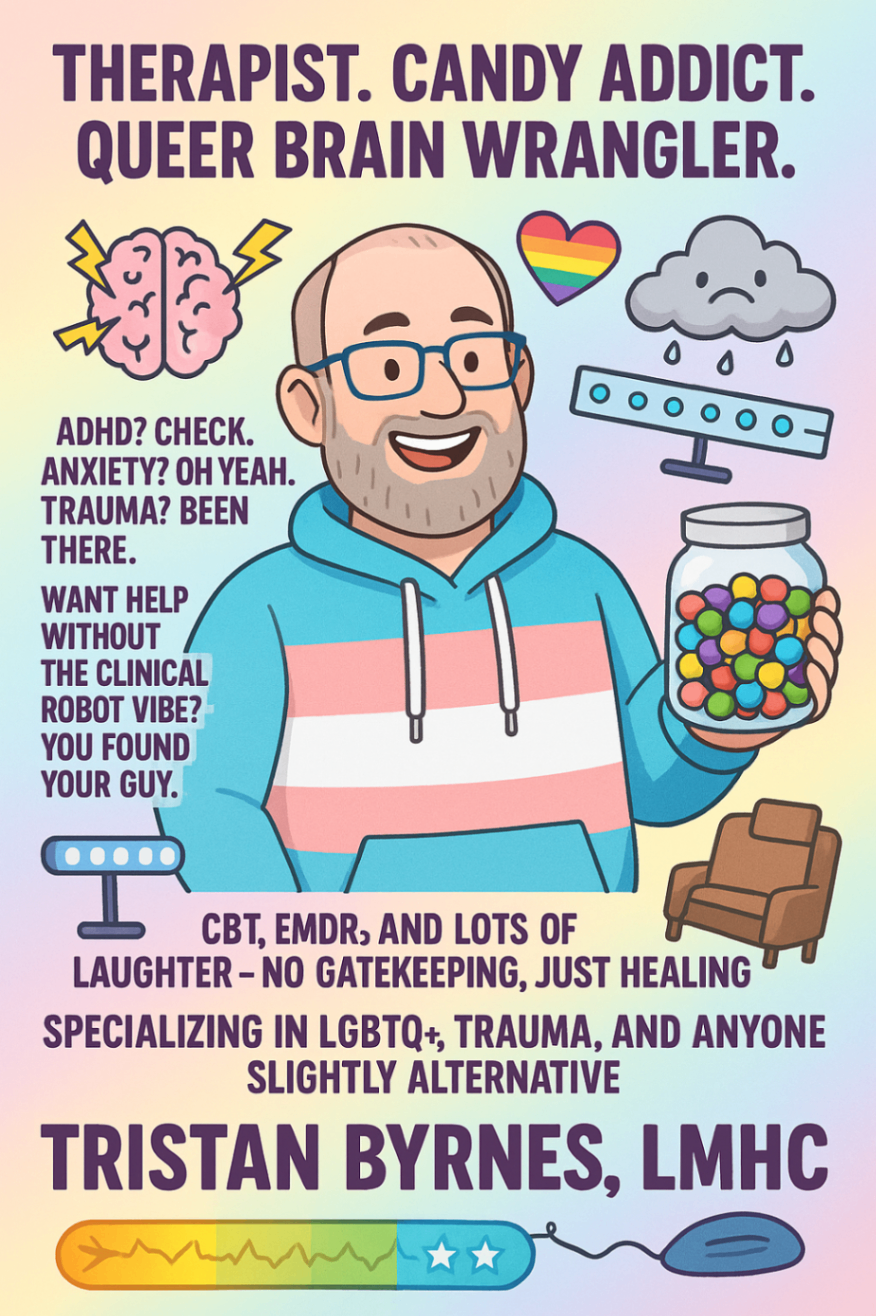
At Byrnes Counseling Group, we're a trans-led practice specializing in LGBTQ+ affirming and neurodivergent-informed care. If you're looking for a therapist who actually gets it, we'd love to connect.