Room to explore
You can bring uncertainty, mixed feelings, changing language, or a question you have not said out loud yet. There is no deadline for certainty.
GENDER-AFFIRMING THERAPY
Care for the questions, changes, relief, grief, and everyday life that deserve more than a debate about who you are.
Gender can touch nearly every part of a life. It can shape how safe you feel in your body, what happens when you look in the mirror, how you move through work or family, the relationships that feel possible, and the amount of energy it takes to be seen accurately. Sometimes the feeling is a clear, long-held knowing. Sometimes it is a quieter question that keeps returning. Both deserve care.
At Byrnes Counseling Group, gender-affirming therapy is a place to bring your whole life, not just the part that might fit in a medical form. You do not need to defend your identity, make a case for transition, decide on a label, or arrive with your thoughts neatly sorted. We can start with what feels difficult, what feels hopeful, and what would make your life feel more like yours.
Good gender-affirming therapy does not hand you an answer and call it insight. It makes room to notice what is true for you. That might include relief when you try new language, discomfort that is hard to name, the pressure of other people's expectations, fear about change, or the simple wish to stop having every decision feel so loaded.
Therapy can be useful whether you are questioning, newly out, years into transition, happily settled in your identity, or dealing with a problem that is not about gender at all. Being trans, nonbinary, gender-expansive, or queer does not make every hard thing a gender issue. It does mean you deserve a therapist who understands that identity can shape the context around stress, relationships, safety, healthcare, work, and belonging.
You can bring uncertainty, mixed feelings, changing language, or a question you have not said out loud yet. There is no deadline for certainty.
Family, culture, disability, work, sexuality, relationships, money, healthcare, and safety can all affect what feels possible. They belong in the conversation.
Sessions can make space for emotions and also help with boundaries, decisions, communication, coping, and the daily work of staying connected to yourself.
Appointments are available in Pinellas Park, with telehealth across Florida and Pennsylvania for people who need care to fit around real life.
There is no universal transition story, and there is no correct way to be trans, nonbinary, or gender-expansive. Some people want help naming a feeling that has been present for years. Others are trying to make a practical decision, recover from a painful interaction, navigate a relationship, or find a way to live with less vigilance. The work follows your priorities.
Therapy can also be a place to talk about depression, anxiety, trauma, grief, ADHD, burnout, or relationship patterns without treating your identity as a complication. Your gender is not a distraction from the rest of your life. It is part of the context in which you are living it.
Even welcome changes can bring a lot with them. You may be trying to decide who to tell, what to keep private, how to handle a parent's reaction, whether a relationship still fits, or how to take care of yourself when the news is loud and the world feels less predictable. You may be carrying the cost of staying small for a long time. You may also be feeling joy, possibility, and a growing sense of ease that deserves attention too.
Therapy gives those experiences somewhere to go. We can slow down a decision that feels urgent, practice language for a hard conversation, make a plan for a stressful appointment, or sit with a feeling that has not yet become a plan. The point is not to make you more palatable to other people. It is to help you build a life with more safety, agency, connection, and room to breathe.
A free consultation is a low-pressure place to ask practical questions and get a sense of whether the practice feels right. You can talk about what you are looking for, whether in-person or telehealth care is more workable, and any questions you have about insurance, scheduling, or letters for gender-affirming care. You do not have to disclose your full history or commit to ongoing therapy during that conversation.
If you decide to begin, early sessions are usually about getting oriented. We talk about what is bringing you in, what support already exists, what feels most important, and what helps when things get overwhelming. Some people come in with a clear goal. Others need space to find the words. Either is a valid place to start.
You are allowed to ask for what makes therapy feel workable. That can include using the name and pronouns that fit you, talking honestly about past therapy experiences, naming a concern about privacy, or taking time before discussing something personal. A first appointment is not a test of whether you are trans enough, certain enough, or ready enough. It is a chance to see whether the work feels respectful, useful, and grounded in your goals.
Byrnes Counseling Group is a trans-led practice that works with LGBTQ+, gender-expansive, neurodivergent, kinky, polyamorous, and relationship-diverse adults. You should not have to spend your session explaining that your relationships are consensual, that your name matters, or that your identity is not a symptom to solve.
Affirming care is not about assuming every answer. It is about being curious without treating you as a lesson, respecting your autonomy, and taking your experience seriously. Some sessions may focus on gender. Others may focus on a difficult week, a relationship, trauma, burnout, or a future you are trying to make possible. The throughline is that you get to be fully present in the room.
YOUR CARE TEAM
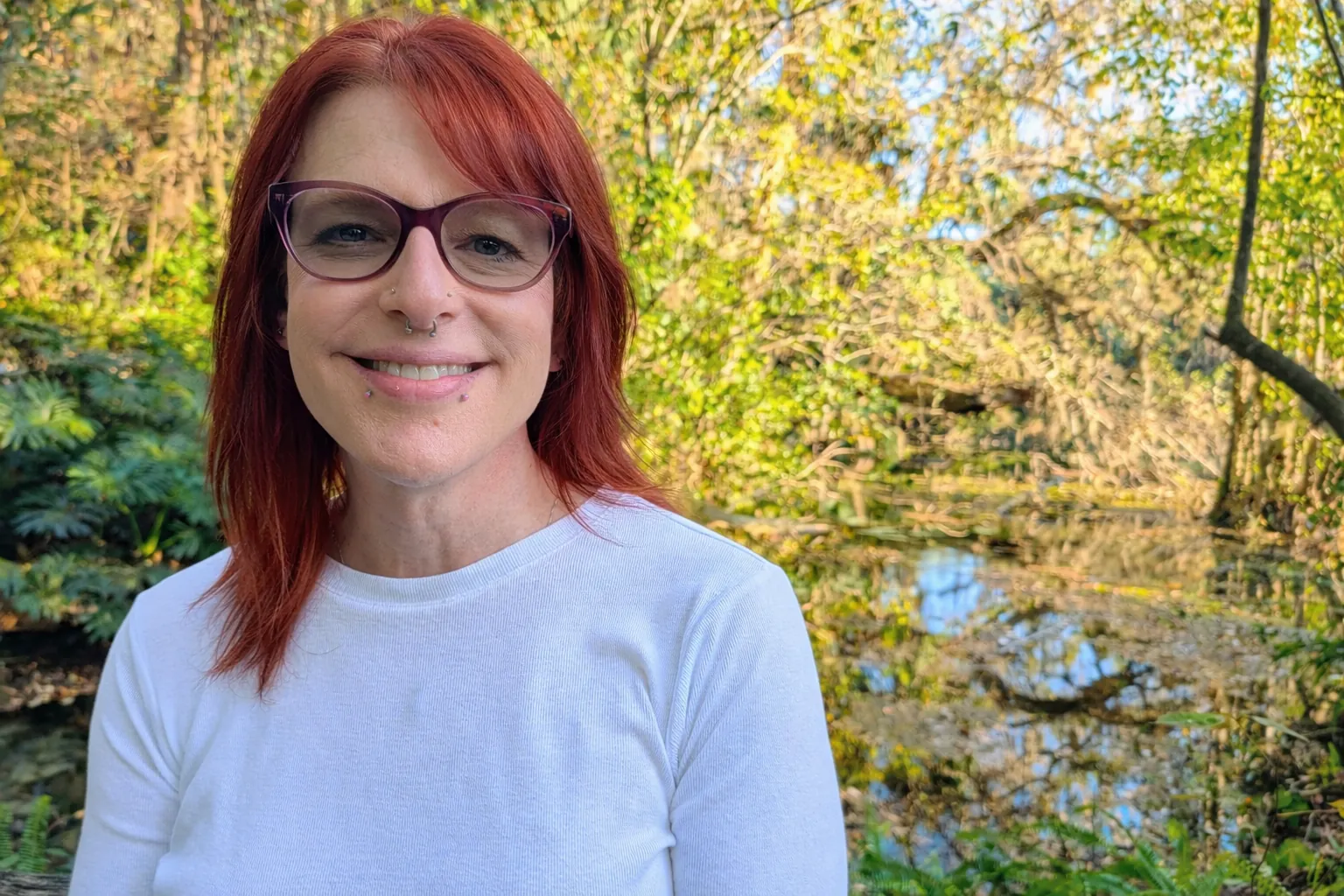
Tristan Byrnes, LMHC, and Christy Wolf, Registered Mental Health Counselor Intern, offer collaborative, person-centered therapy for adults navigating identity, relationships, trauma, anxiety, and life transitions.
Meet the therapistsNo. Therapy can be a place to explore questions, feelings, language, and possibilities without being pushed toward a particular identity or outcome. You do not need to arrive with a label, a plan, or a timeline.
Yes. Support can include making decisions at your own pace, managing anxiety or family responses, building support, coping with dysphoria, and making room for the practical and emotional changes that can come with transition.
When clinically appropriate, Byrnes Counseling Group can provide letters for gender-affirming care. A consultation is a good place to ask about the current process and whether the practice is the right fit for what you need.
No. The practice is trans-led and LGBTQ+ affirming. Your time can stay focused on your actual questions, relationships, stressors, hopes, and needs rather than educating your therapist.
The practice accepts several insurance plans, including Aetna, Cigna, Optum/UnitedHealthcare, UMR, Carelon, Tricare, Oscar, Meridian, and Curative. Coverage varies by clinician and plan, so it is worth confirming benefits before scheduling.
START WITH A CONVERSATION
A free 15-minute consultation is a place to ask questions, talk about what you need, and decide whether Byrnes Counseling Group feels like a fit.
Book a free consult