You set the pace
EMDR is collaborative. We slow down, pause, and return to grounding when you need to. Consent and capacity are part of the work, not an afterthought.
EMDR THERAPY NEAR ST. PETERSBURG
Trauma-informed, affirming care for adults who are tired of having their past show up in the present.
Some experiences do not stay politely in the past. They show up in a body that stays on alert, a nervous system that cannot settle, a relationship that feels harder than it should, or a memory that still lands with the force of the moment it happened. You may understand what happened and still feel as though your system has not caught up.
EMDR therapy can offer another way forward. At Byrnes Counseling Group, the work is collaborative, practical, and paced around your actual capacity. You do not have to prove that your experience was serious enough, explain your identity from scratch, or be ready to tell every detail before you can receive care.
EMDR stands for Eye Movement Desensitization and Reprocessing. It is a structured therapy approach that can help the brain and body process distressing experiences that still feel unfinished. During an EMDR session, your therapist may use eye movements, tapping, or other forms of bilateral stimulation while helping you stay connected to the thoughts, feelings, memories, and body sensations that are present.
The goal is not to erase your history or convince you that something painful was fine. The goal is to reduce the intensity and grip of experiences that keep getting pulled into your present. For some people, that means a memory no longer hijacks an ordinary day. For others, it means less panic, less shame, more room to choose how they want to respond, or a clearer sense that the danger is over.
EMDR is collaborative. We slow down, pause, and return to grounding when you need to. Consent and capacity are part of the work, not an afterthought.
Trauma does not happen in a vacuum. Identity, relationships, family, work, disability, sexuality, gender, and systems of harm can all shape what healing needs to account for.
Before deeper processing, we build skills and shared understanding so sessions feel steady enough to be useful rather than simply intense.
In-person appointments are available nearby in Pinellas Park. Telehealth is available across Florida and Pennsylvania.
People looking for EMDR therapy in St. Petersburg often want more than a generic trauma treatment. They want a clinician who understands that the things causing distress may include a single overwhelming event, but they may also include a long history of having to stay alert, hide parts of yourself, hold everything together, or make yourself easier for other people to understand.
Byrnes Counseling Group works with LGBTQ+, trans, gender-expansive, neurodivergent, kinky, polyamorous, and relationship-diverse adults, as well as people whose identities are not the central reason they are seeking therapy. The practice is trans-led and trauma-informed. That means you do not need to turn a session into a glossary lesson before getting to what is actually hard.
In-person sessions take place in Pinellas Park, near St. Petersburg. For many people, telehealth is also a more realistic option: it can remove a commute, make it easier to fit care around work or caregiving, and let you meet from a space where you feel more settled. During a consultation, you can talk through availability, format, and whether EMDR seems like the right starting point.
There is no single list that decides whether someone is "traumatized enough" for EMDR. Therapy begins with your experience, not a test. EMDR may be worth discussing when the past keeps intruding on the present or when your reactions feel bigger, faster, or more exhausting than you want them to be.
EMDR is not the only useful approach, and it is not a race toward the hardest material. Sometimes therapy starts with stabilization, relationship work, grief support, practical coping tools, or simply having a place to understand what your system has been carrying. The right approach depends on you, not on a treatment trend.
At the beginning, therapy is often about getting oriented. You and your therapist talk about what brings you in, what feels most urgent, what helps you recover when you are overwhelmed, and what you want more of in your life. You may learn grounding tools, identify supportive people or routines, and build a shared language for when something is too much.
When it makes sense to move into EMDR processing, the work remains structured and collaborative. You are not left alone with a difficult memory. Your therapist checks in, helps you notice what is coming up, and makes space for your mind and body to process without forcing a particular outcome. You can stop, slow down, or choose a different direction. Good therapy is not about enduring more distress to earn relief.
After sessions, some people feel lighter, tired, emotional, thoughtful, or simply more aware of what their system has been doing. We plan for that. The aim is to build care that supports your life outside the appointment, not a process that asks you to disappear into therapy and hope the rest of your week survives it.
It is okay to be interested in EMDR and still not know whether you are ready for it. “Ready” does not mean perfectly calm, fully organized, or able to talk about every hard thing without feeling anything. It means there is enough stability and support to approach difficult material without leaving you more overwhelmed than when you arrived.
Sometimes that foundation is already there. Sometimes the first phase of therapy is about sleep, safety, boundaries, coping with a current crisis, reducing substance use, managing panic, or finding a little more support in everyday life. That is not a delay or a failure to get to the “real” work. It is real work, and it can make later processing feel more useful and less punishing.
EMDR may be one part of therapy rather than the whole thing. You might move between practical problem-solving, grief, relationship patterns, identity exploration, grounding, and memory processing as your needs change. Byrnes Counseling Group does not treat a specific method as a script you have to follow. The focus stays on what helps you feel safer, more connected, and more able to live the life you want.
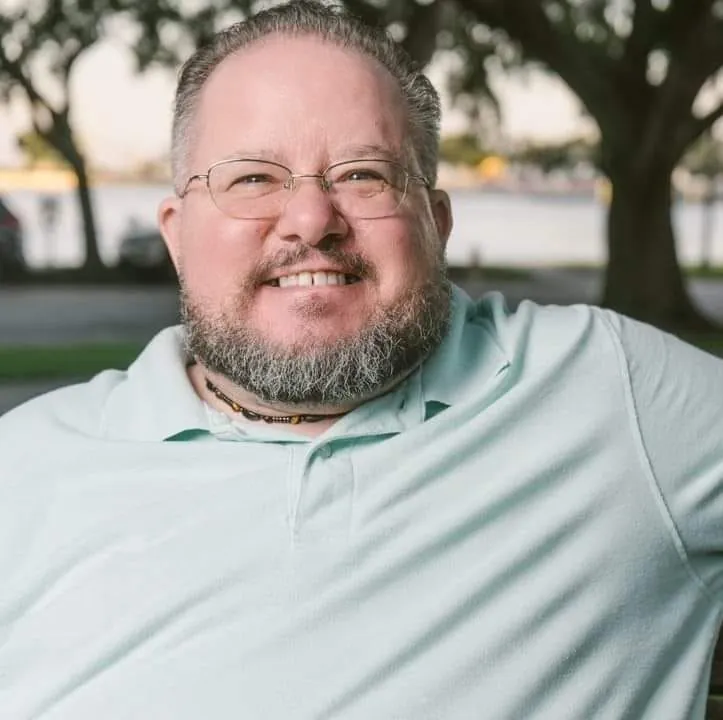
YOUR THERAPIST
Tristan Byrnes, LMHC, brings more than a decade of clinical work and lived experience to therapy with LGBTQ+, gender-expansive, neurodivergent, and trauma-surviving adults. His approach is collaborative, affirming, and gatekeeper-free.
Meet TristanYes. Byrnes Counseling Group offers in-person EMDR appointments in nearby Pinellas Park, as well as telehealth appointments across Florida and Pennsylvania. A free consultation is a good time to talk through what format feels most workable for you.
No. EMDR is not an invitation to overwhelm yourself or perform your pain. You and your therapist decide what feels manageable, build enough support first, and return to grounding whenever it is needed.
People seek EMDR for many experiences that still feel active in the present, including grief, anxiety, difficult relationship patterns, identity-based stress, and memories that are hard to set down. A consultation can help you decide whether EMDR or another approach is a better fit.
The practice accepts several insurance plans, including Aetna, Cigna, Optum/UnitedHealthcare, UMR, Carelon, Tricare, VA, Oscar, and Meridian. Coverage varies by clinician and plan, so it is worth confirming benefits before scheduling.
A FIRST CONVERSATION
A free 15-minute consultation is a low-pressure place to ask about EMDR, discuss whether the practice feels like a fit, and decide on a next step.
Book a free consult