January hits different when the holidays are over. The decorations are packed away, the forced family gatherings are behind us, and suddenly you're left with this weird emptiness where all that anticipatory stress used to live. If you're LGBTQ+ or neurodivergent, that post-holiday hangover might come with an extra layer of exhaustion, especially if your family's "support" feels more like tolerating your existence than actually celebrating who you are.
And here's the thing: with the 2026 Florida legislative session about to kick off, that feeling of being "watched" or judged isn't just in your head. The stakes for being visible, for taking up space, for simply existing as yourself, they genuinely feel higher right now.
Your Social Anxiety Isn't "Just Shyness"
Let's get something straight: when you're part of a marginalized community, social anxiety often isn't about being shy or introverted. It's a survival response. Your nervous system has learned to scan rooms for safety, to calculate risks before speaking up, to armor yourself against potential rejection. That's not a character flaw, that's your brain doing exactly what it's supposed to do when your environment hasn't consistently felt safe.
Think about it. When you've spent years navigating family dinners where you have to edit yourself, workplaces where you're not sure how "out" you can be, or public spaces where holding hands with your partner feels like a political statement, of course social situations trigger your fight-or-flight response. Your anxiety is actually working overtime to protect you.

This becomes even more complex for neurodivergent folks, who might already be managing sensory overwhelm, social communication differences, or the exhaustion of masking. Add family dynamics that don't quite "get" you into the mix, and social anxiety can feel like a constant background hum.
The Support Gap: When Family is "Trying" But Missing the Mark
Maybe your family isn't outright rejecting you, they're just… slow. They use your old name sometimes. They ask invasive questions about your relationships or your body. They mean well, but their "support" comes with conditions, timelines, or a learning curve that leaves you doing all the emotional labor.
This lukewarm support can actually be harder to navigate than outright rejection because it keeps you in this constant state of hope and disappointment. You end up walking on eggshells, grateful for scraps of acceptance while secretly grieving the unconditional love you deserve.
After the holidays, when you've spent days or weeks managing these dynamics, social anxiety can spike. You're emotionally depleted from performing "easy-going family member" while your authentic self got shelved. No wonder stepping into other social spaces feels daunting.
The Florida Factor: When "Being Seen" Feels High-Stakes
Let's acknowledge the elephant in the room. With the new legislative session starting up, being visibly LGBTQ+ in Florida carries extra weight right now. Laws that target our community don't just exist in courtrooms: they seep into everyday interactions, making that hypervigilant part of your brain work even harder.
When politicians debate your right to exist, use public bathrooms, or access healthcare, it's not abstract policy: it's your daily reality. Social anxiety makes perfect sense when the world keeps reminding you that your identity is up for debate.
This isn't about being dramatic or oversensitive. It's about recognizing that your nervous system is responding to real threats to your safety and dignity. Your social anxiety is actually pretty smart: it's just exhausting to live with.

Enter: Chosen Family
Here's where things get hopeful. Chosen family isn't just a nice concept: it's a radical reimagining of what support and belonging can look like. Instead of waiting for biological family to catch up or hoping society becomes more accepting, you get to intentionally build relationships with people who see you, celebrate you, and show up for you unconditionally.
Chosen family transforms social anxiety into social safety by creating spaces where your guard can come down. These are the people who remember your pronouns without being reminded, who check in after rough news cycles, who celebrate your wins without needing context or explanation.
In chosen family spaces, you don't have to perform palatability or manage other people's comfort levels. You can just exist: messy, complex, fully human: and trust that you'll still be loved at the end of the conversation.
Building Your Circle of Safety
Creating chosen family isn't about finding perfect people: it's about finding people who are willing to show up imperfectly but consistently. Look for folks who:
- Listen without trying to fix or minimize your experiences
- Remember details about your life and follow up on things that matter to you
- Respect your boundaries without making it about them
- Celebrate your authenticity instead of asking you to tone it down
- Offer support that feels sustainable rather than performative
These relationships often grow organically through shared communities: LGBTQ+ groups, neurodivergent spaces, advocacy work, creative communities, or even online forums where you connect with people who share your experiences.

From Anxiety to Safety: The Practical Shift
When you have chosen family anchoring you, social interactions start feeling different. Instead of entering every room wondering "Will I be accepted here?" you can think "I already know I'm valued: this is just one interaction among many."
That shift from scarcity to abundance changes everything. Social anxiety thrives on the fear that rejection will leave you completely alone. Chosen family breaks that fear by proving that rejection from one person or group doesn't threaten your entire support system.
You start taking healthy risks: speaking up in meetings, setting boundaries with acquaintances, trying new social activities: because you know you have people in your corner regardless of how things go.
Creating New Traditions
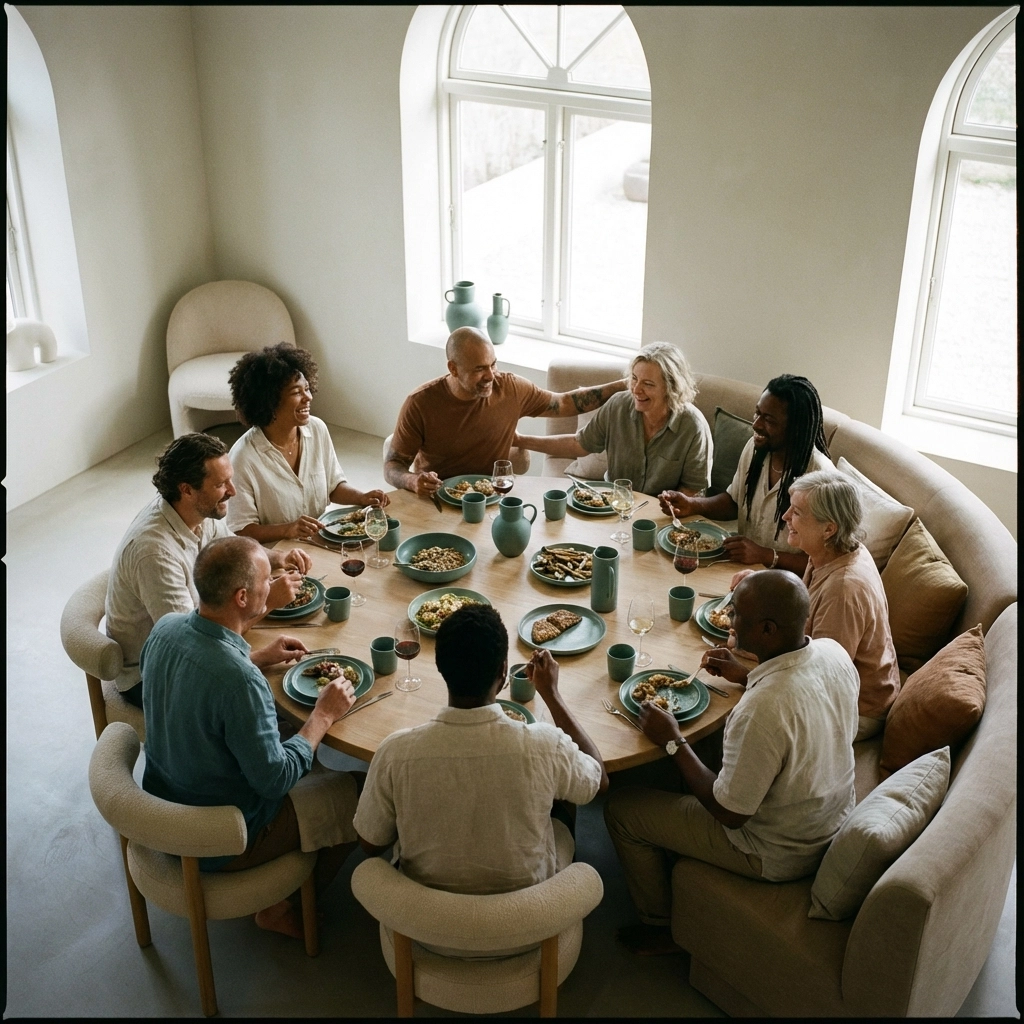
Post-holidays is actually the perfect time to start building chosen family traditions. Maybe it's a monthly dinner where everyone brings something that represents their culture or identity. Maybe it's group texts during hard news cycles or celebration calls for big and small wins.
The beauty of chosen family traditions is that you get to design them around what actually feels nourishing instead of obligatory. Want to have "Friendsgiving" in March because November is too chaotic? Do it. Want to create rituals around transition anniversaries, name change celebrations, or coming out milestones? Perfect.
These intentional practices create the social safety net that many of us didn't get growing up, and they build resilience for navigating the broader world.
When Professional Support Helps
Sometimes, even with amazing chosen family, you need additional support to work through social anxiety: especially when it's rooted in trauma, rejection, or ongoing safety concerns. That's where identity-affirming, trauma-informed therapy comes in.
Working with a therapist who understands the intersection of social anxiety and marginalized identities means you don't have to educate them about why being LGBTQ+ or neurodivergent in Florida feels complicated right now. They get that your anxiety isn't something to just "get over": it's something to understand, work with, and gradually transform into a tool that serves you rather than limits you.
Your Social Safety is Worth Investing In
As we head into this new year: and this new legislative session: remember that your need for social safety isn't optional or indulgent. It's essential. You deserve relationships where you can breathe fully, spaces where your presence is celebrated, and communities that have your back when the world feels uncertain.
Chosen family doesn't replace the work of advocating for broader acceptance or fighting harmful legislation. But it does give you a foundation of love and support that makes that work sustainable. When you know you're not fighting alone, you can show up more powerfully for yourself and others.
If you're ready to explore how social anxiety, family dynamics, and identity intersect in your life, we're here to support that journey. At Byrnes Counseling Group, we offer identity-affirming, trauma-informed care that honors the complexity of being yourself in a world that doesn't always feel safe.
Your chosen family is waiting to be built: and you deserve every bit of love and safety it will bring.